
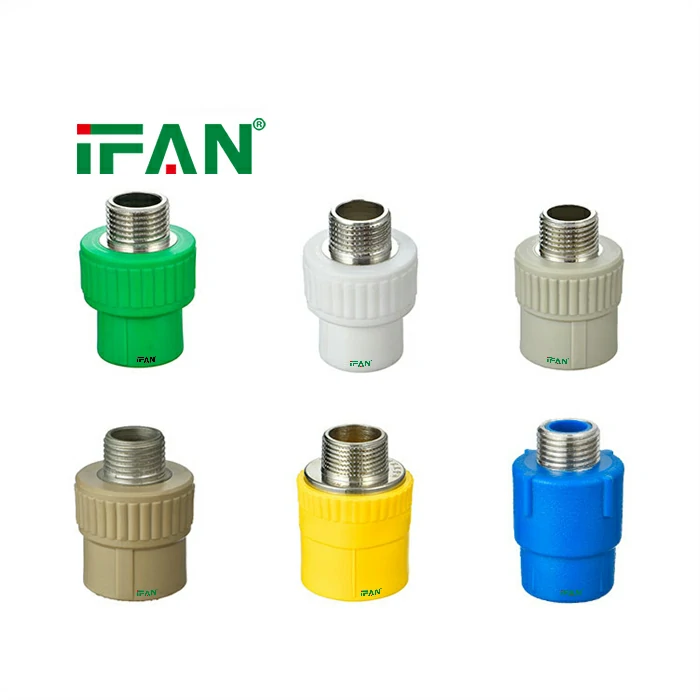
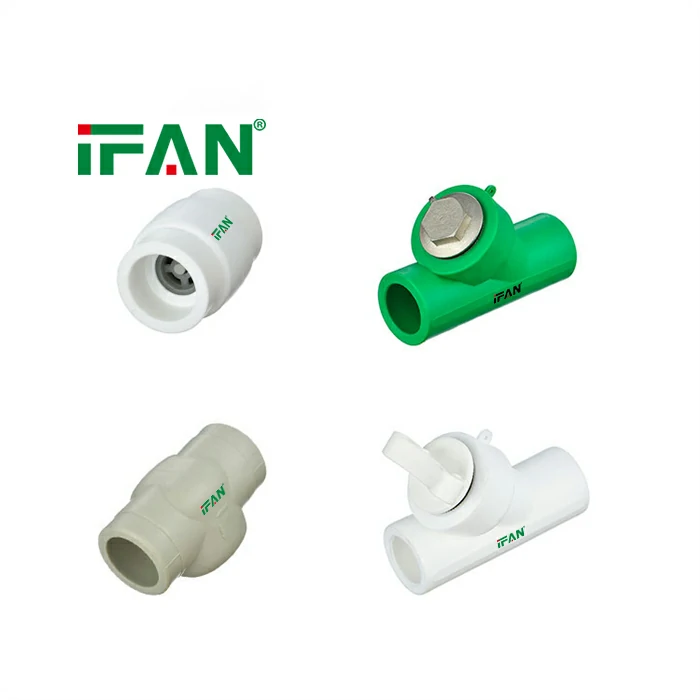
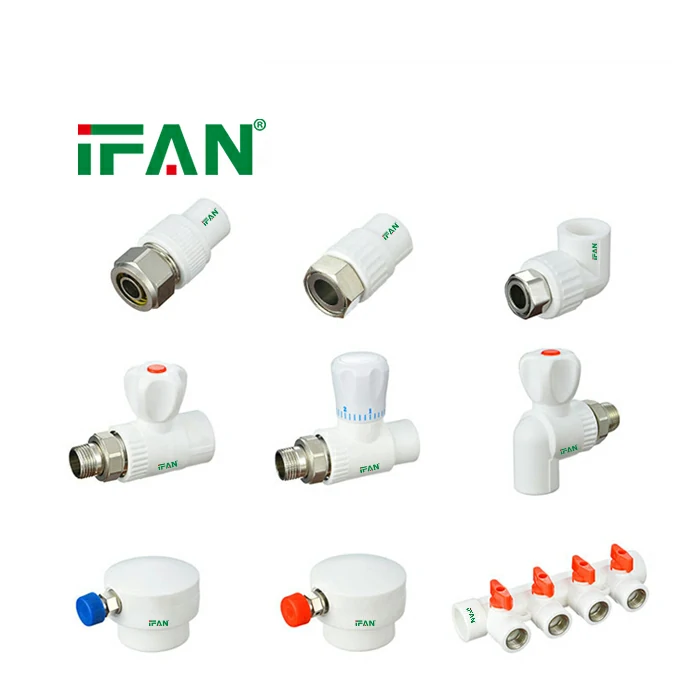
Flexibility Use PPR Fitting
Material:100% Hyosung
Size:20-110mm
Application:Pipe Lines Connect
OEM:Provide OEM Services
Sample:Sample Freely
Send Inquiry
Product Details ofFlexibility Use PPR Fitting
Site Assessment and Trench Preparation for Buried PPR
Proper underground installation begins before any pipe leaves the truck. Conduct a thorough site assessment to identify potential obstacles such as existing utilities, soil conditions, and terrain variations that affect pipeline routing [14†L4-L5]. The trench must be excavated precisely-width and depth sufficient to accommodate the pipe while providing proper support and meeting local regulations [14†L8-L9]. After excavation, place appropriate bedding material such as sand or gravel at the trench bottom. This bedding creates a stable foundation and protects the pipe from external loads and ground movement. Proper bedding is essential to prevent PPR pipe deformation, stress concentration, and premature failure [14†L9-L10]. Never lay PPR pipe directly against sharp rocks or uneven ground-the point loading will create stress risers that eventually crack the pipe wall.
Handling and Positioning During Installation
PPR pipes must be handled carefully during underground installation to avoid damage that becomes invisible once backfilled. Do not drag pipes across the trench edge or drop them onto bedding material-impacts create micro-cracks that grow under pressure. Position pipes without bending beyond the manufacturer's minimum bend radius; PPR is rigid and does not tolerate sharp deviations without elbow fittings. For directional changes, use factory PPR elbows (45° or 90°) rather than attempting to bend the pipe. The Plastics Pipe Institute (PPI) emphasizes that proper handling and positioning during installation directly determines joint sealing and long-term durability in underground environments [14†L10-L12].
Fusion Joint Quality Requirements for Buried Applications
Underground PPR installations demand higher fusion joint quality standards than above-ground systems because leaking joints cannot be visually inspected once covered. Every joint must be tested hydrostatically before backfilling. Use socket fusion welding with the same temperature (260°C) and time parameters as above-ground installations, but add extra care to contamination prevention-dust and moisture in trench environments easily compromise joint surfaces. Deburring is mandatory before welding; any burr left on the cut pipe end, when heated, creates extra blockage inside the pipe that may go undetected until the system operates under pressure [20†L34-L36]. Accept no shortcuts: improper fusion in concealed locations means excavating to repair-a costly process that disrupts finished landscaping or flooring.
Backfilling and Compaction Procedures
Backfilling technique directly impacts long-term pipe integrity. After successful pressure testing, backfill in layers rather than dumping material all at once. Each layer of bedding material should be compacted gently-excessive compaction forces transmitted through the bedding can ovalize PPR pipes and induce stresses at fusion joints. The backfill material should be free of rocks, construction debris, or sharp objects that could contact the pipe. For pipes installed under driveways or traffic areas, additional protective measures such as concrete encasement or thicker bedding may be required per local codes. Cold water lines and hot water lines installed in the same trench must maintain minimum separation distances-typically 150mm (approximately 6 inches) to prevent thermal transfer affecting pipe performance [3†L15-L16].
Protecting PPR Pipes from External Loads and Ground Movement
Underground pipes experience loading from soil weight, surface traffic, and seasonal ground movement. PPR's polypropylene random copolymer structure provides sufficient strength for most residential and light commercial applications when properly bedded and backfilled. However, for installations under heavy vehicle traffic (roads, parking lots, loading docks), specify higher pressure ratings (PN20 or PN25) or consider protective conduits. The homogeneous structure of PPR allows some accommodation to local ground movement-polypropylene homopolymer piping systems can adjust to minor soil shifts without cracking [19†L19-L20]. For areas prone to significant ground settlement or seismic activity, flexible transition couplings at building entry points may be necessary to accommodate differential movement between the buried pipe and the structure.
Marking and Documentation for Future Maintenance
Every underground PPR installation requires accurate as-built documentation before backfilling. Record pipe routing, fitting locations, depth measurements, and any deviations from original design drawings. Install detectable warning tape or tracer wire above buried plastic pipes-standard practice in many jurisdictions for all non-metallic underground utilities. Without metallic content, buried PPR cannot be located by conventional pipe locators; tracer wire allows future maintenance crews to find the line without excavation damage. Also photograph completed fusion joints before backfilling as evidence of proper installation technique. These documentation steps protect both the installer and property owner if excavation becomes necessary years later for unrelated site work.
Summary
Underground PPR installation requires excavated trenches with sand or gravel bedding, careful pipe handling to avoid damage, hydrostatic pressure testing of all joints before backfilling, layered compaction with stones excluded from backfill material, tracer wire installation for future locatability, and accurate as-built documentation. Proper bedding prevents pipe deformation under soil loads, while meticulous fusion joint preparation ensures the pipe system's long-term reliability when concealed from view and inaccessible for routine inspection.
Hot Tags: flexibility use ppr fitting, China, suppliers, manufacturers, factory, customized, bulk, pricelist, for sale, free sample, made in China, PPR Stop Concealed Valve, PPR Plastic Reducing Elbow, PPR Plug With Air Valve, PPR Equal 90 Elbow, PPR Brass Male Tee, PPR Male Seated Elbow
Send Inquiry
