
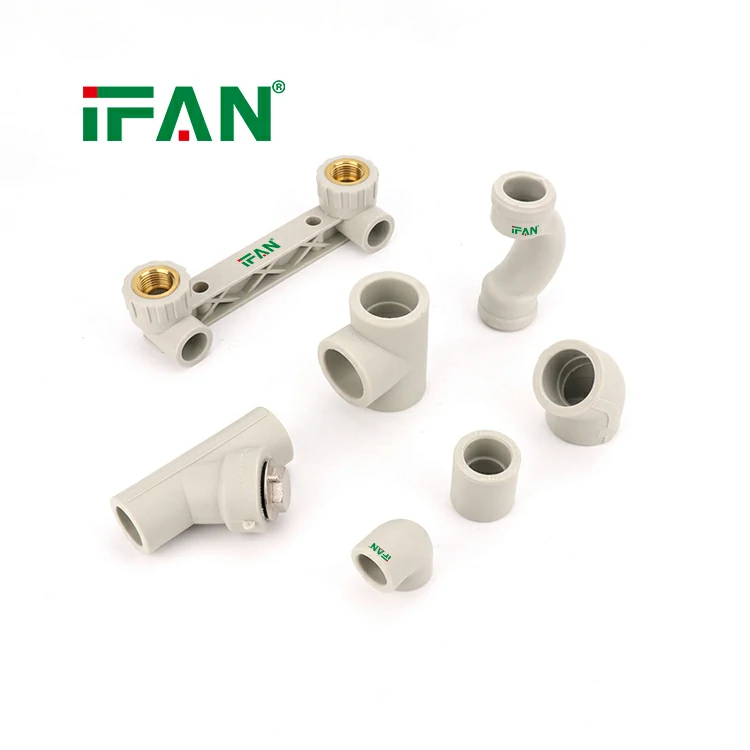

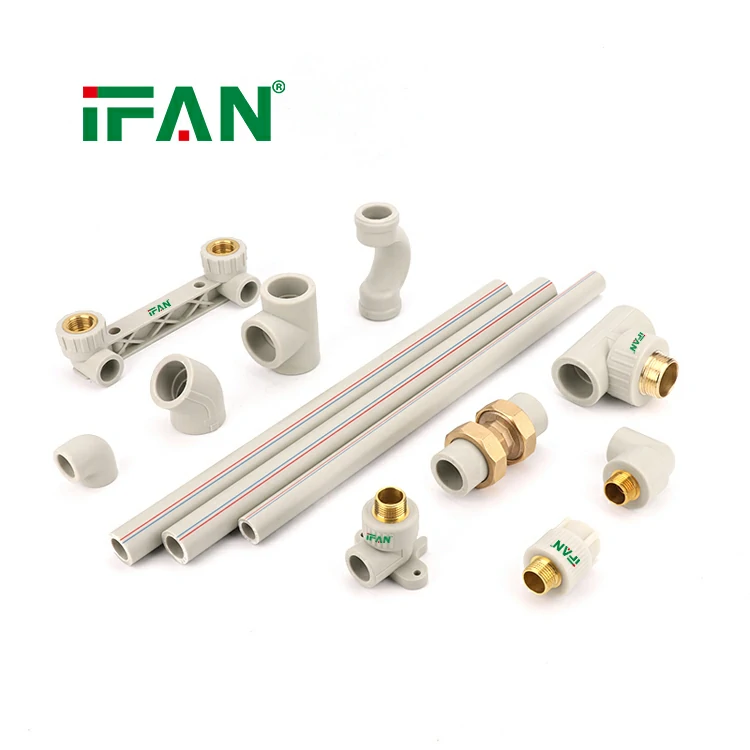
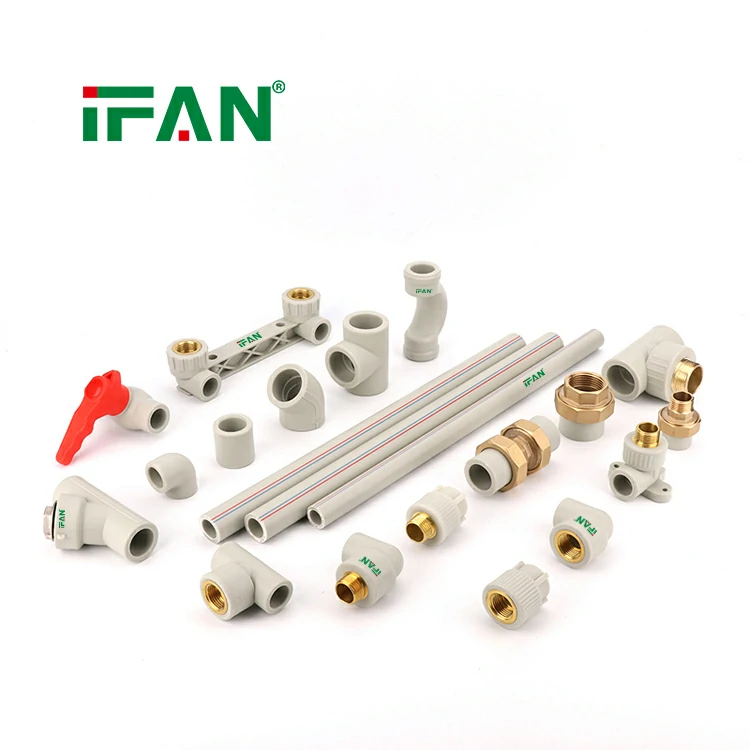
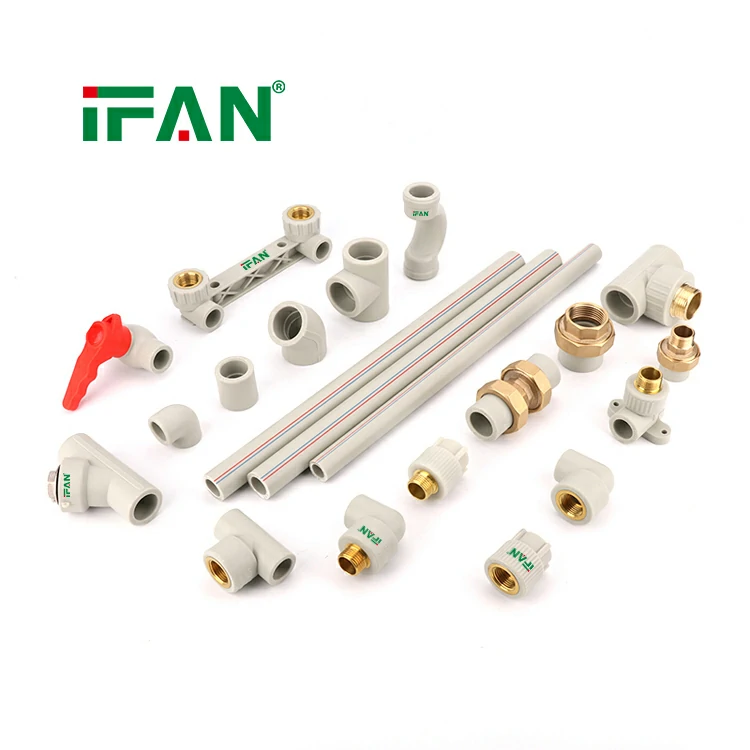
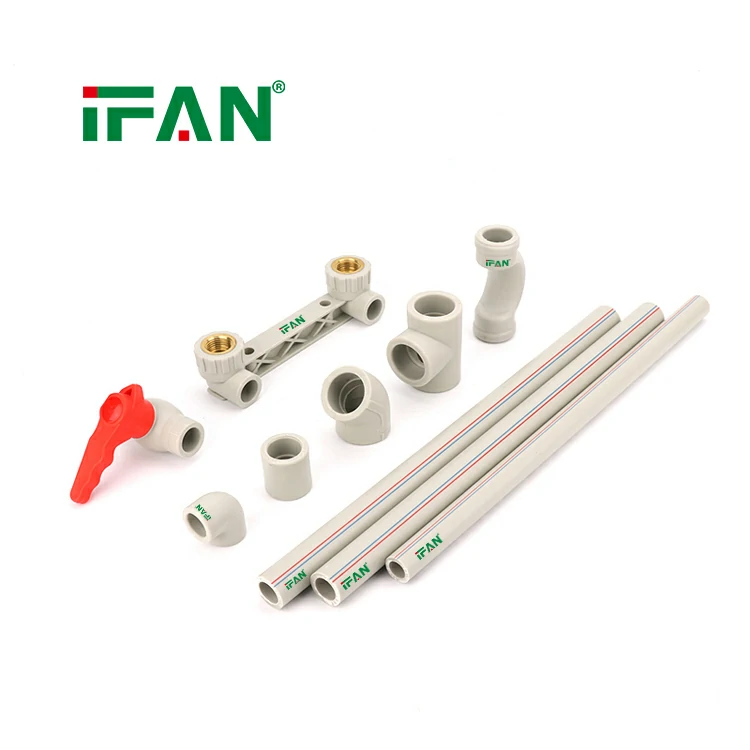
Product Details ofIFAN Factory Wholesale PPR Pipe Fittings
Upper Continuous Thermal Boundary
PPR fittings carry a certified maximum continuous operating temperature of 180°F (82°C) - a limit dictated by the inherent thermal characteristics of the polypropylene random copolymer structure and corroborated via extended hydrostatic strength evaluations conforming to ISO 9080. This perpetual service ceiling demarcates the highest temperature at which the material can function indefinitely, free from hastened thermal-oxidative decay, mechanical strength erosion, or jeopardized heat-fusion joint soundness. For the bulk of residential and commercial hot water installations - where thermostat configurations generally sit between 120°F and 150°F - PPR fittings function with a considerable thermal safety buffer.
Mandatory Pressure-Temperature Derating Protocols
A core tenet of thermoplastic piping engineering holds that pressure-bearing capacity bears an inverse relationship to operating temperature: as thermal levels climb, the polymer's capacity to withstand internal pressure wanes. At the peak continuous temperature of 180°F (82°C), PPR fittings' pressure rating is reduced to 100 psi (6.9 bar). At milder temperatures - 140°F (60°C), for instance - the adjusted pressure tolerance rises accordingly, affording extra operational leeway for moderately heated systems. System planners and installers are obligated to reference the manufacturer's issued pressure-temperature rating graphs to confirm that working pressure at the expected service temperature stays beneath the relevant derated figure; neglecting appropriate derating risks premature joint breakdown or catastrophic rupture under persistent load.
Capacity for Transient Thermal Spikes
Extending past the continuous service threshold, PPR fittings hold a specified ability to endure brief temperature spikes reaching roughly 200°F (93°C). This fleeting thermal resilience caters to practical operational irregularities - thermostat failures, boiler temperature overshoot at ignition, or momentary superheated water stagnation in isolated system segments. Such spikes must, however, be truly ephemeral - constrained in both intensity and duration - and must not inform the design of systems intended for routine operation above 180°F. Extended or recurrent exposure to temperatures nearing 200°F will hasten polymer degradation and truncate the fitting's functional service life.
Definitive Temperature Cap for Water Conveyance
For water distribution and hydronic heating duties, 180°F (82°C) stands as the absolute upper operational limit. This ceiling amply covers the full spectrum of standard service scenarios: household domestic hot water (typically calibrated between 120°F and 140°F), commercial hot water production (frequently falling in the 140°F–160°F band), and hydronic space heating networks (generally running between 140°F and 180°F, dependent on emitter configuration). The overwhelming majority of deployed PPR systems function well beneath the 180°F mark, ensuring the material's long-term performance remains firmly within its verified design parameters.
Case Study: Residential Domestic Hot Water at 140°F / 60 Psi
A building's domestic hot water network running at a 140°F (60°C) thermostat setting and 60 psi supply pressure exemplifies an ideal PPR fitting application. At this temperature, the fittings' derated pressure capacity far surpasses the 60 psi operating demand, delivering a generous safety margin. The system functions in a zone where thermal aging progresses at a negligible pace, and heat-fused joints retain their full structural cohesion year upon year. Decades of field deployment validate that such setups provide dependable, leak-free operation for the duration of the building's lifespan, requiring zero maintenance intervention.
Case Study: Hydronic Space Heating at 160°F / 80 Psi
A hydronic heating loop operating at 160°F (71°C) and 80 psi - characteristic of a mid-temperature boiler setup feeding radiators or fan-coil units - sits comfortably within PPR fittings' certified operational bounds. At 160°F, the derated pressure rating remains above 100 psi, supplying sufficient buffer over the 80 psi working pressure. Sound system design incorporates temperature-linked pressure derating, and installers confirm all fittings meet the targeted service specifications. The outcome is a secure, efficient heating distribution grid that capitalizes on PPR's corrosion resistance and thermal consistency to deliver uniform performance across consecutive heating cycles.
Case Study: Radiant Floor Heating at 120°F
Radiant floor heating installations - which typically run at supply water temperatures spanning 85°F to 120°F, varying by floor assembly and thermal demand - rank among the most thermally undemanding applications for PPR fittings. At 120°F (49°C), the operating temperature sits well below the 180°F continuous service cap, and the derated pressure capacity at this level is markedly higher than the low operating pressures (commonly 20–40 psi) found in residential radiant loops. This expansive thermal and pressure safety margin guarantees PPR fittings operate with outstanding reliability in radiant setups, where extensive continuous pipe runs and embedded installation render future repair access exceptionally difficult - rendering the material's proven longevity and joint integrity particularly prized.
Enduring Reliability at Moderate Elevated Temperatures (140°F)
Operating continuously at 140°F (60°C), PPR fittings exhibit remarkable longevity, with an anticipated service life surpassing half a century. At this thermal level, the progression of thermal-oxidative degradation and molecular chain breakdown within the polypropylene random copolymer structure occurs at a negligible pace, ensuring that critical mechanical attributes - such as tensile resilience, impact tolerance, and fused joint cohesion - remain virtually unchanged throughout the system's intended lifespan. This operational sweet spot renders 140°F an exemplary condition for PPR utilization, striking an ideal equilibrium between heat tolerance and extended durability that seamlessly meets the demands of household hot water networks and low-to-moderate temperature hydronic heating setups.
Performance Under Maximum Continuous Thermal Load (180°F)
Positioned at the pinnacle of the continuous operational range - 180°F (82°C) - the material's enduring capabilities stay formidable yet are inevitably condensed compared to cooler operational scenarios. Prolonged exposure at this thermal ceiling hastens the synergistic impacts of creep (gradual deformation under persistent stress) and thermal-oxidative deterioration, curtailing the forecasted lifespan to roughly 30–40 years, contingent upon actual working pressures and proprietary manufacturer blends. Although this marks a notable contraction from the 50-plus-year horizon at 140°F, a three-to-four-decade operational window at peak temperature still embodies a formidable durability standard, adequately fulfilling the specifications of most commercial and institutional hot water and heating deployments. Accurate pressure derating at this threshold is indispensable for unlocking the material's complete longevity potential.
Prohibition of Steam and Extreme-Temperature Environments
PPR fittings are unequivocally incompatible with steam operations or any scenarios entailing water temperatures surpassing 200°F (93°C). Steam infrastructures function at thermal and pressure levels vastly outstripping polypropylene's mechanical and thermal thresholds - atmospheric-pressure saturated steam registers at 212°F (100°C) alone, already breaching the material's brief excursion cap, while pressurized steam setups entail markedly elevated conditions. Deploying PPR in steam contexts would precipitate swift softening, structural pressure failure, and disastrous joint collapse. Metallic piping alternatives - including copper, carbon steel, or stainless steel - constitute the proper selection for steam conveyance, condensate recovery, and any duties where temperatures transcend thermoplastic piping's validated operational scope.
Compliance with Proprietary Manufacturer Guidelines
Although the thermal performance metrics outlined herein mirror the overarching aptitudes of polypropylene random copolymer as a material category, individual producers may issue marginally varied pressure-temperature specifications dictated by their unique resin compositions, stabilizer blends, injection molding techniques, and quality assurance protocols. Certain high-end product ranges might showcase slightly elevated continuous temperature caps or prolonged service life forecasts owing to superior antioxidant formulations. System architects and installation teams must invariably reference the precise manufacturer's technical specification sheets and assembly instructions for the designated product series, configuring the network in rigorous alignment with those published parameters. Broad generalizations must never supersede product-specific documentation.
Unified Thermal Capability Overview
PPR fittings are purpose-built for dependable hot water conveyance, featuring a maximum continuous operating threshold of 180°F (82°C) alongside temporary tolerance for excursions up to 200°F (93°C). Pressure capacities require proportional derating in tandem with rising temperatures, following the manufacturer's issued pressure-temperature profiles. At a moderate 140°F (60°C) operating point, projected longevity exceeds 50 years with scant material wear; at the 180°F maximum, lifespan contracts to approximately 30–40 years owing to intensified creep and thermal maturation - nevertheless a solid durability marker for rigorous uses. Steam applications and any duties involving temperatures above 200°F are expressly forbidden. Confined to these established parameters - encompassing hot water distribution, hydronic heating, underfloor radiant systems, and analogous uses - PPR fittings furnish an attractive fusion of thermal resilience, corrosion imperviousness, joint steadfastness, and prolonged dependability, positioning them as a technically robust and cost-effective solution for contemporary plumbing and heating frameworks.
Hot Tags: ifan factory wholesale ppr pipe fittings, China, suppliers, manufacturers, factory, customized, bulk, pricelist, for sale, free sample, made in China, PPR Brass Female Elbow, PPR Brass Female Socket, PPR Brass Male Union, PPR Double Union Brass Ball Valve, PPR Plastic Long Short Crossover, PPR Plastic Male Thread Plug
Previous
No InformationSend Inquiry
