
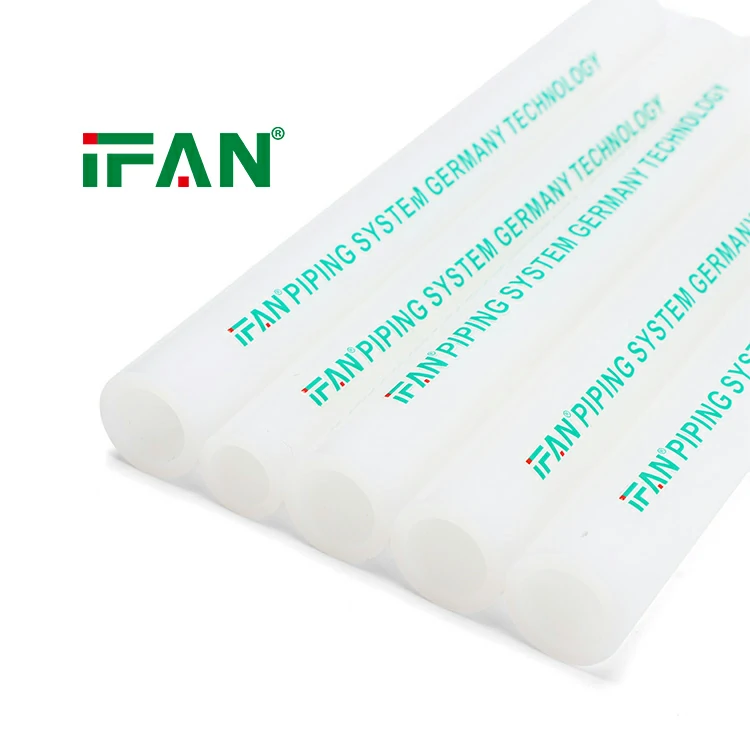
Flexibility Use PEX-AL-PEX Pipes
Brass Fittings: The Traditional Standard
Brass fittings have been the standard for PEX connections since the technology was introduced. Composed primarily of copper and zinc, brass provides high mechanical strength and excellent thermal stability. For high‑pressure applications or systems that will experience wide temperature fluctuations (such as recirculating hot water loops), brass remains the best choice. However, the metallurgy of brass matters significantly for long‑term reliability. Dezincification is a chemical process where water-especially soft water or water with high carbon dioxide content-leaches the zinc out of brass, leaving behind a porous, spongy copper structure that becomes brittle and cracks. For potable water applications, look for brass that conforms to ASTM F1807 standards and carries a dezincification‑resistant rating. For buyers in areas with aggressive water chemistry, brass may not be the most durable long‑term choice.
PPSU (Polyphenylsulfone) Fittings: The High‑Performance Plastic
PPSU is a high‑performance thermoplastic that is increasingly replacing brass in premium PEX fitting systems. Unlike metal, PPSU is completely immune to dezincification, galvanic corrosion, and rust. This makes it an exceptional choice for underground burial, salt water environments, or industrial chemical applications. PPSU fittings are widely used in cold expansion systems (ASTM F1960) and are highly compatible with PEX‑A tubing .
For buyers, the weight difference is immediately noticeable. A bag of 20 PPSU fittings weighs roughly the same as a bag of 5 brass fittings. This reduces shipping costs and makes installation easier on the wrist when working overhead in a crawlspace. PPSU is also extremely tough with high impact resistance, capable of withstanding hard drops onto concrete without fracturing. Because PPSU is fully corrosion‑proof, it is the preferred material for radiant heating systems using glycol antifreeze, as it will not degrade due to chemical exposure.

Poly Alloy Fittings: Budget‑Friendly Composites
Poly alloy fittings (sometimes referred to as poly or composite fittings) are made from engineered plastics such as reinforced acetal or nylon, designed to meet the same ASTM standards as brass at a lower cost point. These are the "entry level" option often found in big box stores. Their primary advantage is price-costing roughly half as much as brass. They are lightweight and non‑corrosive.
However, poly alloy fittings have specific limitations. They have a lower temperature ceiling compared to brass or PPSU. While they meet the standard 180°F rating for hot water, prolonged exposure near this limit can accelerate creep (slow deformation under constant load). Poly alloy fittings are also more susceptible to damage from over‑tightening of the crimp ring. If the crimp tool is not calibrated correctly, the poly alloy barb can compress, ruining the fitting seal. For standard cold water lines or intermittent use hot water, poly alloy is acceptable. For continuous high‑temperature circulation loops or commercial applications, upgrade to brass or PPSU.
Pressure Loss Comparison: Material Does Not Change Flow
One common misconception among buyers is that the material of the fitting changes the water flow rate. In reality, the inner geometry of the fitting determines flow restriction, not the material. A brass 90‑degree elbow has roughly the same pressure drop as a PPSU 90‑degree elbow. However, some designs allow for flow improvement. Expansion fittings (F1960) generally have a larger internal diameter than crimp fittings (F1807). Expansion fittings allow the PEX pipe to butt directly up against the inner wall of the fitting, eliminating the "barb" restriction that creates turbulence in a standard crimp system. Therefore, a PPSU expansion fitting will provide better flow characteristics than a brass crimp fitting simply because of the connection type.
Compatibility with PEX Types
The material of the fitting must be compatible with the joining method, which varies by PEX type. PEX‑A works universally: it can be crimped (F1807), clamped (F2098), pressed (F2080), or expanded (F1960). However, PEX‑A is required for cold expansion methods that use PPSU or brass expansion rings. PEX‑B and PEX‑C, being stiffer, are generally not recommended for expansion; they are best served by brass or poly alloy crimp and clamp systems.
When buying fittings, check the standard marked on the packaging. ASTM F1807 fittings are crimp fittings; ASTM F1960 fittings are expansion fittings. You cannot mix a F1960 PPSU expansion fitting with a PEX‑B pipe using a crimp ring-it will not seal properly.

Corrosion in Mixed Metal Systems
If you are connecting PEX fittings to a water heater or boiler that has copper or stainless steel pipes, the fitting material must prevent galvanic corrosion. Direct connection of brass to copper is safe because they are compatible metals. PPSU, as a plastic insulator, prevents current flow entirely, making it the safest connection to dissimilar metals. Poly alloy fittings are also insulators but may degrade faster if the water temperature fluctuates significantly. In commercial buildings where water velocity is high, the cavitation erosion (microbubbles exploding against the fitting surface) can pit soft poly alloy fittings over time, whereas PPSU and brass maintain their surface integrity.
Making the Right Choice for Your Project
Select brass fittings for high‑temperature continuous circulation systems with stable water chemistry in a commercial building. Select PPSU fittings for new home construction where longevity is the priority and water chemistry is unknown-they will not corrode regardless of aggressive water conditions. Select poly alloy fittings for cold water distribution lines in budget‑conscious projects or for temporary construction site water supplies where future disassembly is expected. Always verify that the fitting material carries an NSF/ANSI 61 certification for potable water safety, as some raw plastics may leach taste or odors into drinking water.
Summary
Brass fittings offer high strength and thermal stability but may undergo dezincification corrosion in aggressive water chemistry. PPSU fittings are completely corrosion‑proof, lightweight, and impact‑resistant, ideal for unknown water conditions and glycol heating systems. Poly alloy fittings are budget‑friendly but have lower temperature ceilings and less durability for continuous high‑temperature operation. Expansion fittings (F1960) provide larger internal diameter and better flow than crimp fittings (F1807) regardless of material. All must carry NSF/ANSI 61 certification for potable water safety.
Hot Tags: flexibility use pex-al-pex pipes, China, suppliers, manufacturers, factory, customized, bulk, pricelist, for sale, free sample, made in China, PEX Alumiunum Overlap Pipe, PEX Alumiunum Laser Pipe, Plastic Floor Heating Pipe
Send Inquiry
