
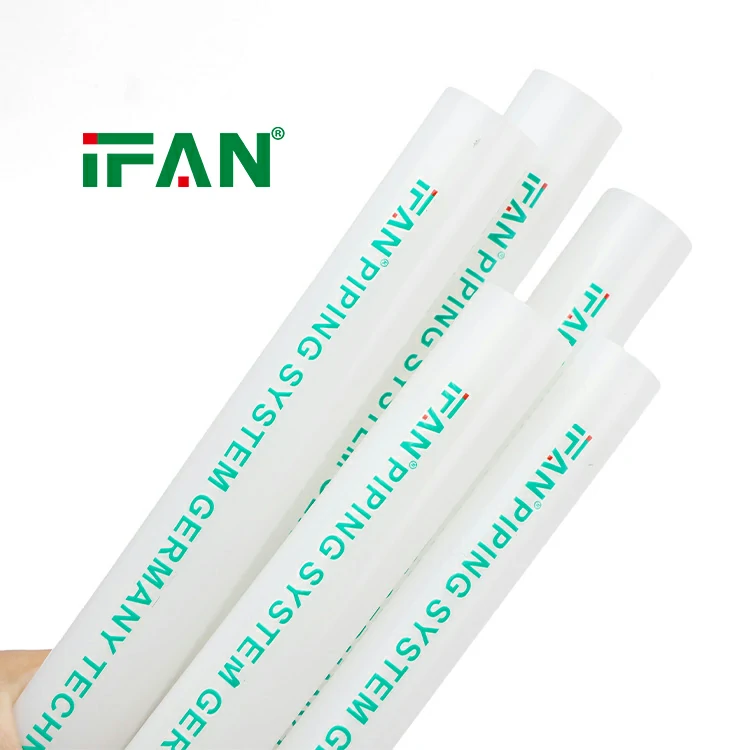
Low Price PEX-AL-PEX Pipes
The Risk of UV Degradation in PEX
Unlike PPR piping systems, which have inherent UV resistance, PEX is vulnerable to sunlight. UV radiation breaks the polymer chains at the surface of the pipe, leading to embrittlement. The damage is not always visible to the naked eye. What looks like simple fading may actually be significant degradation. Research indicates that as few as 30 days of direct sunlight exposure can reduce the expected lifespan of PEX material by at least 21% when used in chlorinated water systems.
For buyers and installers, this has specific practical implications. PEX should never be stored outdoors. If pipe must be temporarily stored outside, cover it with an opaque tarp. UV protection ratings vary by product. Some PEX is rated for 30 days of UV exposure; higher‑grade PEX may be rated for 6 months (180 days) of protection. For any permanent outdoor installation-such as a run to a detached garage or a rooftop solar system-PEX must be buried, enclosed in a UV‑resistant conduit (such as PVC or metal), or covered with closed‑cell pipe insulation rated for outdoor use. Exposed PEX will crack and fail within a few years.

UV Exposure from Artificial Light Sources
A less understood risk is artificial ultraviolet light. Recent research indicates that UV emissions from certain artificial light sources-including halogen lights, fluorescent tubes, and some LED lights-may adversely affect PEX piping after decades of exposure. For pipes installed in mechanical rooms, attics, or commercial kitchens with 24‑hour lighting, consider covering the PEX with foil tape or installing it inside a drop ceiling rather than routing it directly under the light fixtures. While the exposure time required for damage from artificial light is much longer than sunlight (years vs. weeks), it is still a relevant factor for high‑brightness commercial environments like plant growing facilities or inspection stations.
Chlorine Resistance and Material Designation Codes
Municipal water supplies use chlorine or chloramine to kill bacteria. Over decades, this chlorine can attack the inner wall of plastic piping, leading to oxidation, cracking, and ultimately brittle failure. PEX must demonstrate specific levels of chlorine resistance according to ASTM F2023 test methods . The results are coded into the Material Designation Code printed on the pipe.
The first digit of the four‑digit code indicates chlorine resistance. Class 5 is the highest rating, indicating that the pipe can withstand chlorinated water at 140°F for extended periods without oxidative degradation. Class 3 or 4 is also acceptable, but Class 5 is recommended for municipal water supplies with high chlorine concentrations. The second digit indicates UV resistance, with Class 3 being the highest (6 months protection). The last two digits ("06") indicate the hydrostatic design basis (630 psi HDB). When buying PEX, look for the code "5306" on the pipe markings-this indicates the highest possible chlorine and UV resistance combined with standard pressure rating. A code of "5306" or "4306" ensures suitability for most municipal water applications.

Chemical Compatibility in Industrial and Agricultural Use
PEX is resistant to a wide range of chemicals, but it is not chemically inert. The Plastics Pipe Institute (PPI) Technical Report TR‑19 provides comprehensive listings of chemical resistance levels for PEX and other plastic piping materials to some 600 chemicals across various concentrations. PEX generally handles diluted acids (hydrochloric, sulfuric), most salts, alcohols, detergents, and water treatment chemicals. However, concentrated oxidizing acids (nitric acid above 10%), hydrocarbons like gasoline and diesel, and halogenated solvents (such as acetone or methylene chloride) will rapidly destroy PEX.
For agricultural applications where PEX will be used to distribute liquid fertilizer or pesticides, request a formal chemical compatibility statement from the pipe manufacturer specific to the exact chemical concentration at the operating temperature. Testing indicates that PEX performs well in 30% sodium hydroxide (caustic soda) and acetic acid solutions, but fails rapidly in concentrated sulfuric acid. For these aggressive environments, PPSU fittings rather than brass or poly alloy are recommended due to their superior chemical resistance.
Temperature Limits and Pressure De‑Rating
PEX operates safely up to a maximum continuous temperature of 180°F to 200°F, depending on the rating (SDR‑9 PEX pressure rating drops to 80 psi at 200°F). Exceeding this temperature even briefly can cause the PEX to soften, expand, and blow off the fitting. However, short‑term excursions (such as a water heater malfunction) up to 210°F may not cause immediate failure, but they reduce the long‑term life of the pipe.
As covered in earlier articles, pressure rating decreases as temperature increases: 160 psi at 73°F, 100 psi at 180°F. For solar thermal systems or boiler connections that approach 200°F, verify that the pipe has an ASTM F876 rating for high‑temperature applications. Many manufacturers produce specific "high‑temperature PEX" (sometimes labeled PEX‑HT) for these applications. Never use standard PEX for steam lines-PEX will melt and fail immediately at steam temperatures exceeding 212°F.
Long‑Term Durability: 50‑Year Expected Lifespan
When installed correctly and protected from UV, PEX has an expected service life exceeding 50 years. Extensive hydrostatic testing per ASTM standards extrapolates long‑term performance, with the stress regression curve extending far beyond the 50‑year mark for properly formulated PEX compounds [8†L6-L8]. The actual lifespan depends heavily on three factors: water temperature (hotter water reduces life), chlorine concentration (high chlorine levels require Class 5 rated pipe), and operating pressure (continuous operation at maximum pressure reduces safety margins). For a standard residential cold water line at 70°F, PEX may last 100 years or more.
For property owners, the pipe itself is not the weak link. The lifespan of the system is typically determined by the elastomeric O‑rings inside push‑fit fittings. While the PEX body remains intact, the rubber seals may dry out and crack after 20‑30 years. For maximum system longevity, use crimp or expansion fittings with metal‑to‑plastic contact, which have no O‑rings to degrade. Brass and PPSU fittings will outlast the pipe itself, providing a true 50+ year service life with no scheduled replacement of sealing elements.
Summary
PEX requires UV protection: 30 days of sunlight exposure reduces lifespan by at least 21%. Material Designation Code first digit indicates chlorine resistance (Class 5 highest), second digit UV resistance (Class 3 highest), and last two digits hydrostatic design basis. PEX is chemically resistant to dilute acids, salts, and alcohols but fails rapidly in gasoline, diesel, and concentrated oxidizing acids. Continuous temperature limits are 180‑200°F with pressure de‑rating from 160 psi at 73°F to 100 psi at 180°F. Expected service life exceeds 50 years when installed correctly with adequate UV shielding.
Hot Tags: low price pex-al-pex pipes, China, suppliers, manufacturers, factory, customized, bulk, pricelist, for sale, free sample, made in China, PEX Alumiunum Laser Pipe, Plastic Floor Heating Pipe, PEX Alumiunum Overlap Pipe
Send Inquiry
