
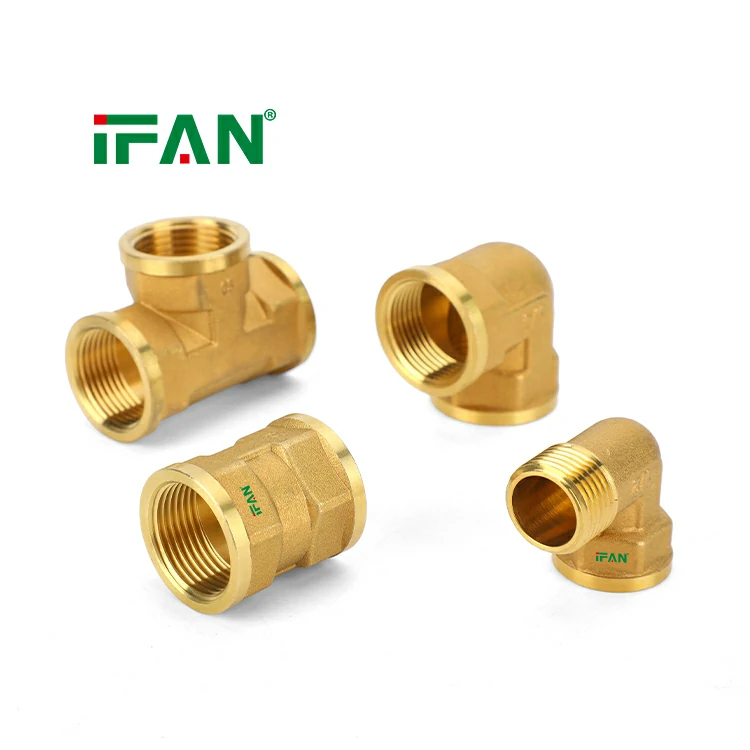
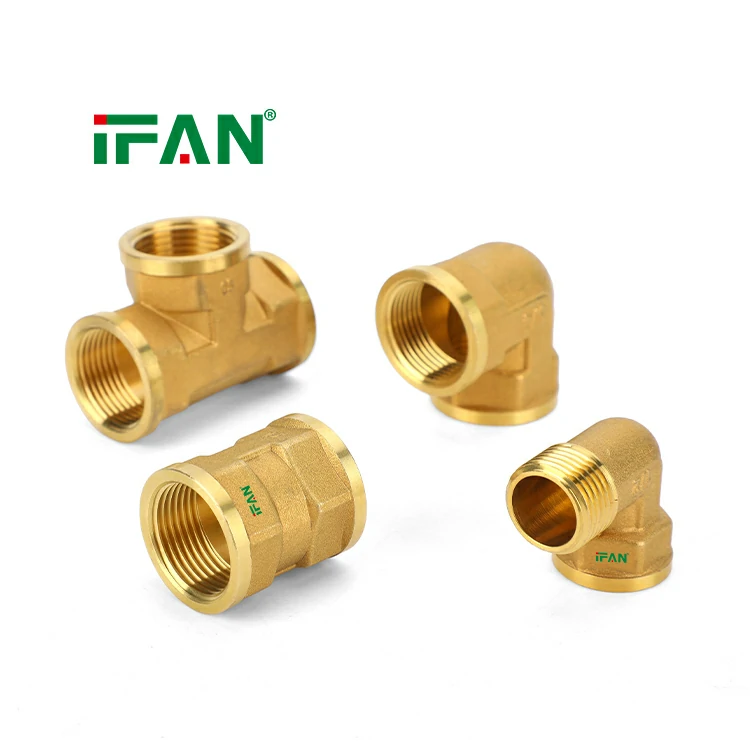
IFAN Durable Use Brass Fittings
Color: Brass Color
Size:1/2"-2"
Material: Brass
Package: IFAN OPP Bag+Carton
Sample: Free
Send Inquiry
Product Details ofIFAN Durable Use Brass Fittings
Lead Content Regulations for Potable Water
Lead in brass fittings is a health concern because lead can leach into drinking water. The US Safe Drinking Water Act (SDWA) mandates that any fitting used in potable water systems must have a weighted average lead content of ≤0.25%. This is known as "low-lead" or "lead-free" brass. The European Drinking Water Directive requires similar limits (typically ≤0.5% lead content). Standard brass (sometimes called "free-machining" brass) contains 2-4% lead, which improves machinability but is unacceptable for potable water. For irrigation, industrial cooling, or non-potable systems, standard brass is still permitted.
How Low-Lead Brass Is Made
To achieve ≤0.25% lead, manufacturers substitute bismuth, silicon, or selenium for lead while maintaining machinability. Bismuth brass (C89833, C89550) is the most common low-lead alloy. Silicon brass (C87850) offers high strength and corrosion resistance. Low-lead brass is more difficult to cast and machine, requiring slower production speeds and specialized tooling, which increases cost. It also has slightly lower thermal conductivity than leaded brass. However, for drinking water safety, these trade-offs are necessary. All low-lead brass fittings should be marked "LF", "Lead Free", or "NSF 61" to indicate compliance.
Where Low-Lead Brass Is Mandatory
In the US, low-lead brass is required for all fittings in public water systems and residential plumbing carrying drinking water, including: angle stops, supply lines, faucet connectors, water heater connections, pressure reducing valves, and backflow preventers. The law applies to both new construction and replacement fittings. Some states (California, Vermont, Maryland) have even stricter limits (≤0.1% lead). For commercial buildings (schools, hospitals, restaurants), low-lead brass is also mandatory. Inspection authorities regularly test random samples; non-compliant fittings can result in project rejection and fines.
Applications Where Standard Brass Is Acceptable
Standard brass (with 2-4% lead) remains legal and cost-effective for non-potable applications: irrigation systems (lawn sprinklers, agricultural water), industrial cooling loops, HVAC condensate drains, compressed air lines, fuel oil lines, hydraulic systems, and fire protection lines (except where water may be consumed). For gas distribution, standard brass is acceptable because lead does not leach into gas. For outdoor hose bibbs that are not used for drinking water, standard brass is permitted but should be clearly labeled. Buyers should never use standard brass in a kitchen, bathroom, or drinking fountain line.
Identifying Low-Lead vs. Standard Brass
Low-lead brass fittings are almost always marked. Look for "LF", "Lead Free", "NSF 61", or "AB1953" (California standard). The fitting may also have a green or blue color band. The brass itself may appear slightly darker or redder due to the bismuth alloy. Standard brass fittings are often unmarked regarding lead content, or may have "ASTM B16" or "B283" which does not indicate lead level. When in doubt, request a material test certificate from the supplier. For imported fittings, be aware that some countries do not enforce lead limits – always demand certification.
Cost Difference and Lifecycle Considerations
Low-lead brass fittings typically cost 15-30% more than standard brass due to the more expensive bismuth alloy and slower machining. For a residential water heater connection, the difference is negligible ($1-2 per fitting). For a large commercial project with hundreds of fittings, the additional cost can be thousands of dollars – but non-compliance risks are higher. Consider the total cost of replacement if a standard brass fitting is rejected by an inspector. Also, low-lead brass has comparable corrosion resistance and service life (50+ years). For potable water, the small upfront premium is justified.
Summary
Low-lead brass (≤0.25% Pb) is required for all potable water fittings in the US and EU. Standard brass (2-4% Pb) is permitted only for non-potable applications (irrigation, industrial, gas). Look for "LF", "Lead Free", or "NSF 61" markings. Cost is 15-30% higher, but safety and compliance justify it. Never use standard brass in drinking water lines. Always request certifications for imported fittings.
Hot Tags: ifan durable use brass fittings, China, suppliers, manufacturers, factory, customized, bulk, pricelist, for sale, free sample, made in China, Brass Copper Fitting Tee, Brass Fitting Bouchon Bush, Brass Fitting Brass Nipple, Brass Fitting Double Male Tee, Brass Fitting Male Elbow, Brass Fitting Equal Elbow
Previous
No InformationSend Inquiry
