
A Comprehensive Guide to PPR Fitting Types
PPR (Polypropylene Random Copolymer) fittings are essential for constructing reliable plumbing and heating systems. Below is a structured overview of common PPR fitting types, their functions, and applications:
1. Straight Connectors (Direct Fittings)
Function: Used to join two PPR pipes of the same diameter end-to-end.IFAN factory 30+ years manufacture experience support color /size customization support free sample.Welcome to consult for catalog and free samples.This is our Instagram Website: www.instagram.com.
Variants:
Equal Straight Connector: For pipes of identical diameters.
Reducing Straight Connector: For pipes of different diameters.
Applications: Extending pipe runs in straight lines.

2. Elbows (Bend Fittings)
Function: Change the direction of the pipe flow.
Variants:
90° Elbow: For sharp turns (e.g., wall corners).
45° Elbow: For gradual bends (reduces flow resistance).
Applications: Navigating obstacles or altering pipe routing.
3. Tees (T-Fittings)
Function: Split or merge pipe flows into three directions.
Variants:
Equal Tee: All three ports are the same diameter.
Reducing Tee: One or two ports differ in diameter.
Applications: Branching pipes (e.g., supplying multiple fixtures).
4. Cross Fittings (4-Way Connectors)
Function: Connect four pipes at right angles.
Applications: Complex plumbing layouts (e.g., manifold systems).
Note: Less common than tees due to higher pressure drop.
5. Reducers (Size Transition Fittings)
Function: Connect pipes of different diameters.
Variants:
Concentric Reducer: Maintains a centered flow path.
Eccentric Reducer: Offsets the flow path (used to avoid air traps).
Applications: Transitioning between pipe sizes in a system.

6. End Caps (Blind Fittings)
Function: Seal the end of a pipe to prevent flow.
Applications: Temporary or permanent termination of pipe runs.
7. Couplings (Union Fittings)
Function: Allow disassembly of pipe sections for maintenance.
Variants:
Compression Coupling: Uses a rubber O-ring and nut for sealing.
Push-Fit Coupling: Tool-free, quick-connect design.
Applications: Repairs or modular installations.
8. Threaded Fittings (Transition Adapters)
Function: Connect PPR pipes to metal or threaded components.
Variants:
Male/Female Threaded Adapter: Converts PPR to NPT/BSP threads.
Transition Coupling: Combines PPR and metal (e.g., brass) parts.
Applications: Integrating with taps, valves, or water heaters.
9. Valves (Flow Control Fittings)
Function: Regulate or stop water flow.
Variants:
Ball Valve: Full-bore, quarter-turn operation.
Gate Valve: Linear motion for precise control.
Check Valve: Prevents backflow.
Applications: Isolating sections of the system or managing pressure.
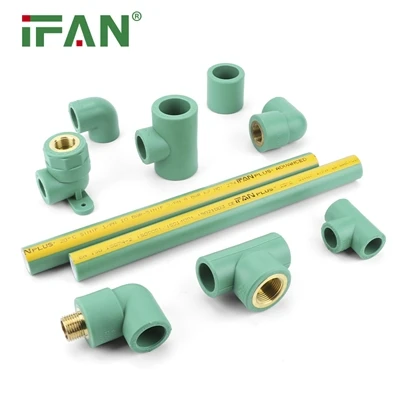
10. Specialty Fittings
Bridges (Offset Fittings):
Function: Cross over obstacles (e.g., other pipes) without direct connection.
Saddle Clamps:
Function: Tap into existing pipes without cutting them.
Manifolds:
Function: Distribute water to multiple outlets (e.g., underfloor heating).
Key Considerations for PPR Fitting Selection
Material Compatibility: Ensure fittings match the PPR pipe type (e.g., PPR-C, PPR-CT).
Pressure & Temperature Rating: Choose fittings rated for the system's operating conditions (e.g., 95°C, 10 bar).
Installation Method:
Heat Fusion: Preferred for permanent, leak-proof joints (requires specialized tools).
Mechanical Joints: Suitable for temporary or DIY projects.
Certification: Look for fittings with ISO, DIN, or local plumbing standard approvals.
Conclusion
PPR fittings offer a versatile solution for modern plumbing and heating systems. By understanding the types, functions, and applications of each fitting, installers can design efficient, durable, and compliant systems. Always consult manufacturer guidelines and local codes for optimal performance.