
1. Introduction: The Critical Demand for Heat-Resistant Plumbing
In modern construction and industrial applications, plumbing systems are frequently required to transport media at elevated temperatures. From domestic hot water circulation and central heating to industrial process lines, the thermal stability of the piping material is paramount. Polypropylene Random Copolymer (PPR) fittings, in conjunction with their corresponding pipes, have emerged as a superior solution for such demanding conditions. Unlike many conventional plastics, PPR is specifically engineered to withstand continuous high-temperature exposure without significant degradation. This intrinsic property, combined with its unique fusion jointing technology, provides a compelling array of advantages, ensuring system integrity, safety, and longevity where it matters most.IFAN factory 30+ years manufacture experience support color /size customization support free sample.Welcome to consult for catalog and free samples.This is our Facebook Website:www.facebook.com.
2. Exceptional Intrinsic Thermal Stability and Performance
The primary advantage of ASTM F2389 PPR in high-temperature environments lies in its fundamental material properties. PPR is classified as a thermoplastics, designed for sustained operation at high pressures and temperatures. High-quality Type 3 PPR (PP-RCT) can typically handle continuous operating temperatures of up to 70°C and, crucially, can withstand short-term peaks of up to 95°C or even 100°C. This makes it ideal for central heating systems and domestic hot water lines, where temperatures commonly fluctuate within this range. Its high melting point, approximately 140°C, provides a significant safety margin against accidental system overruns. This thermal resilience ensures the material does not soften, deform, or lose its structural integrity under normal and extreme operating conditions, maintaining its shape and strength over decades of use.
3. Unmatched Integrity of the Fusion-Welded Joint
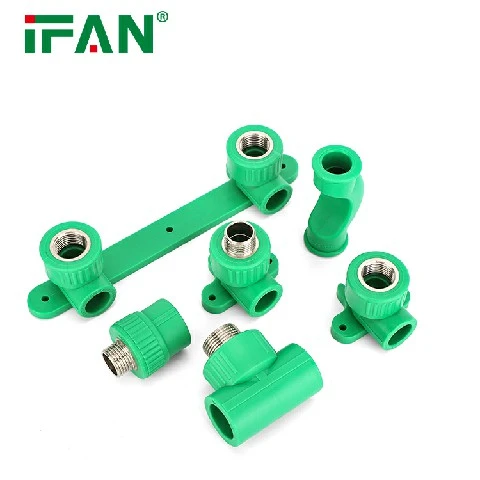
Perhaps the most significant advantage over metal or other plastic systems is the performance of PPR's joint connections under thermal stress. The heat fusion process creates a monolithic, homogeneous joint where the pipe and fitting become a single piece of material. This is critically important in high-temperature environments, where systems undergo constant thermal expansion and contraction. Mechanical joints, which rely on threads, gaskets, or compression rings, are vulnerable to loosening and leaking over time due to these cyclic stresses. In contrast, a PPR fusion joint expands and contracts uniformly with the rest of the system, eliminating this primary failure point. The joint remains as strong and leak-proof as the pipe itself, ensuring long-term reliability.
4. Superior Resistance to Scaling and Corrosion
In high-temperature water applications, limescale deposition and corrosion are major concerns that can lead to reduced flow, energy inefficiency, and system failure. Unlike metal pipes, which are prone to oxidation (rust) and scaling, PPR is chemically inert. Its ultra-smooth inner surface prevents mineral deposits from adhering, a problem that is accelerated in hot water. This scale-resistant property ensures consistent water flow and pressure, and improves heat transfer efficiency in heating systems over the entire lifespan of the installation. Furthermore, PPR is immune to electrolytic and microbiologically influenced corrosion, making it an excellent choice for complex heating systems where different metals might otherwise create corrosive galvanic couples.
5. Enhanced Safety Through Low Thermal Conductivity
PPR's low thermal conductivity presents a dual safety and energy-saving advantage in high-temperature applications. Firstly, it acts as a natural insulator, significantly reducing heat loss from the fluid being transported. This maintains water temperature more effectively in hot water lines, lowering energy consumption and costs. Secondly, and just as importantly, the outer surface of the pipes and fittings remains at a much safer temperature compared to highly conductive metal pipes. This minimizes the risk of accidental burns upon contact, a crucial safety benefit in households with children and in public buildings. It also reduces the need for extensive insulation, simplifying installation and reducing material costs.
6. Long-Term Durability and Cost-Effectiveness
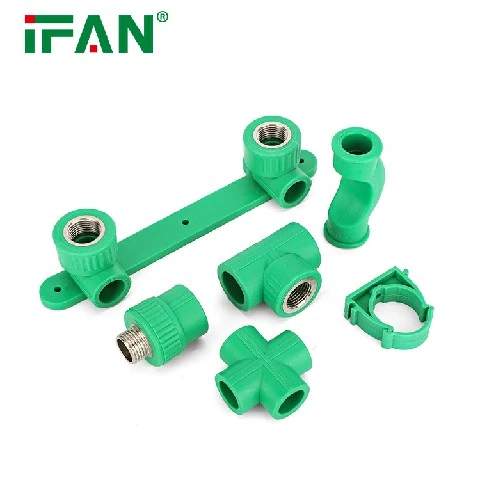
The combination of thermal stability, corrosion resistance, and leak-proof joints translates into exceptional long-term durability for PPR systems in high-temperature environments. The material does not embrittle or weaken over time when used within its specified temperature and pressure ratings. With a proven service life of over long-term durability according to standards for hot water applications at consistent operating pressures, PPR systems drastically reduce the need for maintenance, repairs, and premature replacements. This long lifespan, coupled with the relatively low material cost and fast installation time, results in a significantly lower total cost of ownership compared to traditional metal systems, which are susceptible to corrosion and require more labor-intensive joining methods.
7. Conclusion: The Optimal Choice for Thermal Reliability
In conclusion, the advantages of using PPR fittings in high-temperature environments are multifaceted and compelling. From its inherent thermal stability and pressure resistance to the unparalleled reliability of its fusion-welded joints, PPR provides a robust and durable solution. Its resistance to scaling and corrosion ensures consistent performance and energy efficiency, while its low thermal conductivity enhances both safety and operational economy. For engineers, architects, and plumbers seeking a material that guarantees performance, safety, and longevity in hot water and heating systems, PPR stands out as a thoroughly modern, efficient, and highly reliable choice.