
1. Introduction: The Critical Role of a Reliable Shut-off
Bathroom angle valves are the unsung sentinels of a home's plumbing system, providing critical local shut-off control for toilets, sinks, and bidets. When functioning correctly, they operate unnoticed for years. However, when they fail, the consequences range from minor drips to significant water damage. Understanding the most common malfunctions-their causes, diagnostics, and remedies-empowers homeowners and technicians alike to perform timely maintenance, prevent costly repairs, and ensure a reliable water supply to every fixture. This guide systematically addresses these issues with practical, step-by-step solutions.IFAN factory 30+ years manufacture experience support color /size customization support free sample.Welcome to consult for catalog and free samples.This is our Facebook Website:www.facebook.com.
2. Problem 1: Persistent Leakage from the Valve Stem
Description: Water drips or seeps from around the valve's handle or stem spindle when the valve is turned on. This indicates a failure of the internal packing seal or O-ring designed to contain water along the moving stem.
Causes: Deterioration of the packing material over time due to wear, mineral buildup, or lack of use. It is common in older compression-style valves.
Solution: For valves with a packing nut, first try gently tightening the nut just below the handle (typically a quarter-turn) with a wrench while the valve is on. If leaking persists, turn off the water supply to the house, drain the line, and disassemble the valve handle and packing nut to replace the stem packing (graphite string or rubber O-ring). For cartridge-based ceramic disc valves, a leaking stem usually requires replacement of the entire cartridge.
3. Problem 2: Failure to Fully Shut Off Water Flow
Description: After closing the valve, water continues to flow or drip from the fixture's faucet or supply line. This is a critical failure that prevents fixture maintenance.
Causes (Traditional Valves): A worn-out, deformed, or dislodged rubber washer inside the valve body. Debris or mineral scale (like a small piece of sand or limestone) lodged on the valve seat can also prevent a complete seal.
Causes (Ceramic Disc Valves): Rare, but can be caused by a grain of sand or hard debris caught between the ceramic plates, or catastrophic cracking of the ceramic disc due to water hammer.
Solution: For compression valves, turn off the main water supply, disassemble the valve, and inspect the washer and seat. Replace the washer and clean the seat with a soft cloth. If the brass seat is pitted, a valve seat dressing tool can re-face it, though valve replacement is often simpler. For ceramic disc valves, try rapidly cycling the valve on and off fully a few times to dislodge debris. If this fails, the cartridge must be replaced.
4. Problem 3: Difficulty in Turning the Handle
Description: The valve handle is stiff, gritty, or completely seized, making operation difficult or impossible.
Causes: Mineral scale (limescale/calcium) buildup on the internal threads of compression valves or on the valve stem. Corrosion, especially on low-quality metals, can also fuse components together.
Solution: First, turn off the main water supply. For compression valves, apply a penetrating lubricant (designed for plumbing) to the stem threads via the packing nut area. Allow it to soak for 15-30 minutes. Carefully attempt to turn the handle, working it back and forth gently. If it frees up, operate it fully several times. If it remains seized, the valve likely requires replacement, as forcing it can break the stem or pipe.
5. Problem 4: External Leakage at Connection Points
Description: Water leaks from the valve's inlet (where it connects to the wall pipe) or its outlet (where the supply line connects).
Causes (Inlet Leak): Incorrect or deteriorated thread sealant (Teflon tape or pipe dope), a cross-threaded connection, or a cracked valve body.
Causes (Outlet Leak - Compression Fitting): An improperly seated compression ferrule (brass ring), an overtightened or under-tightened compression nut, or a damaged supply line.
Solution: For inlet leaks, tighten the connection slightly. If leaking continues, you must shut off the main water, disconnect the valve, inspect threads for damage, reapply fresh thread sealant properly, and reconnect. For outlet compression leaks, try tightening the compression nut a further quarter-turn. If it still leaks, you must disconnect, inspect the ferrule for a proper indentation, and replace the supply line and ferrule before reconnecting to a clean, undamaged surface.
6. Problem 5: Low Water Flow from the Fixture
Description: The faucet or toilet tank fills slowly when the angle valve is open, despite normal pressure elsewhere in the home.
Causes: The valve may not be fully open. More commonly, internal blockage is the culprit: debris from corroded pipes, mineral deposits, or a broken piece of washer can obstruct the valve's orifice, especially in older valves.
Solution: First, ensure the valve is fully opened. If flow is still low, turn off the main water supply. Disconnect the supply line from the valve's outlet. Place a bucket over the valve and briefly open it. If water flow from the valve itself is strong, the blockage is in the supply line or fixture. If flow from the valve is weak, the valve is blocked. For compression valves, disassemble and clean the internal passages. For modern valves, replacement is often more efficient than cleaning.
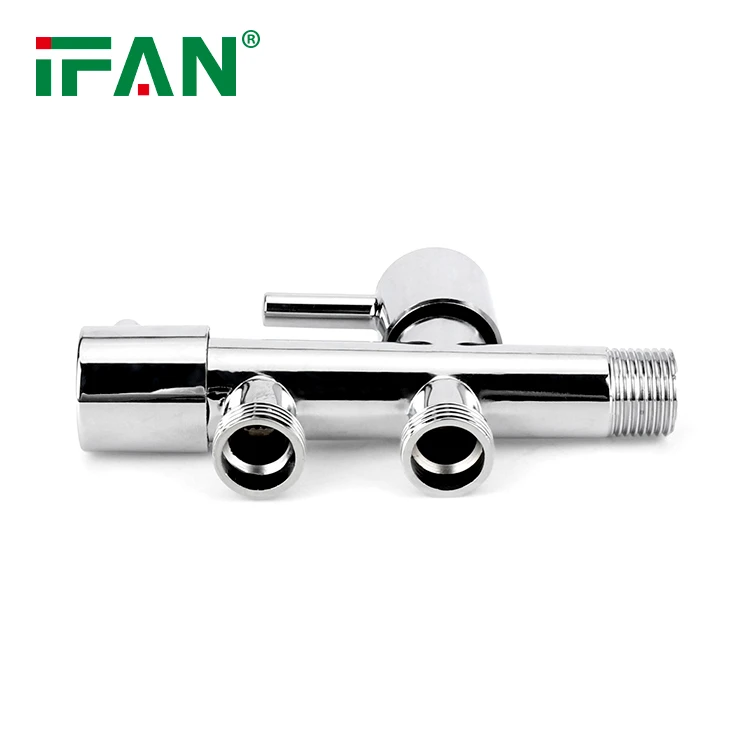
7. Problem 6: Corrosion and Mineral Buildup
Description: Visible green/blue patina (verdigris) or white, crusty mineral deposits on the valve body, particularly at joints.
Causes: Galvanic corrosion from dissimilar metals or a chemical reaction between the metal and water/air. Mineral buildup is from hard water deposits.
Solution: For surface corrosion, clean with a mild acid (like vinegar) and a soft brush. However, extensive corrosion often weakens the metal. If the valve body is heavily corroded, especially at stress points like the inlet threads, the only safe solution is complete replacement to prevent a sudden rupture. Installing a new valve made of DZR brass and ensuring dielectric unions are used when connecting to dissimilar metals can prevent recurrence.
8. Problem 7: Whistling or Humming Noise (Water Hammer)
Description: A whistling noise when the valve is open or a loud "bang" in the pipes when the valve or a connected solenoid (like in a washing machine) shuts off quickly.
Causes: High water pressure and/or the sudden stoppage of water flow causing shockwaves in the pipes (water hammer). A loose washer in a compression valve can also vibrate and whistle.
Solution: For the bang, install or recharge water hammer arrestors on the affected lines. For whistling, check household water pressure with a gauge; if it exceeds 80 PSI, install a pressure-reducing valve. For a vibrating washer in an old angle valve, the definitive fix is to replace the old compression valve with a quarter-turn ceramic disc valve, which has no loose washer to vibrate.
9. Preventative Maintenance Best Practices
Proactive care prevents most common problems. Exercise all angle valves in your home at least twice a year by turning them fully off and then back on. This prevents mineral buildup and keeps seals pliable. Visually inspect for moisture or minor corrosion annually. Know the location of your main water shut-off valve. When replacing any angle valve, consider upgrading to a quarter-turn ceramic disc model for superior longevity and reliability. These simple habits significantly extend the service life of your plumbing components.
10. Conclusion: Diagnosis and Proactive Resolution
Most angle valve problems are diagnosable and solvable with basic tools and a methodical approach. The key is to correctly identify the leak's origin or the symptom's cause before acting. While repairs like washer replacement are straightforward, do not hesitate to replace the entire valve if it is corroded, severely scaled, or of low quality. Investing in a high-quality ceramic disc valve during replacement eliminates the wear-prone components responsible for the majority of traditional valve failures, offering a durable, long-term solution and greater peace of mind for your home's plumbing infrastructure.