
1. Introduction: The Engineering Philosophy of Durability
In an era of disposable products and planned obsolescence, Polypropylene Random Copolymer (PPR) fittings stand apart due to a fundamental design philosophy centered on long-term performance. These components are not merely manufactured; they are meticulously engineered to provide reliable service for over half a century. This extended lifespan is not an accidental byproduct but the result of intentional material science, precise manufacturing standards, and a jointing technology that eliminates inherent weaknesses. Understanding the engineering principles behind PPR fittings reveals why they have become the benchmark for durable plumbing and heating systems in residential, commercial, and industrial applications worldwide.IFAN factory 30+ years manufacture experience support color /size customization support free sample.Welcome to consult for catalog and free samples.This is our Facebook Website:www.facebook.com.
2. Advanced Material Science: The PP-RCT Advantage
The foundation of long-term performance lies in the material itself. Modern high-performance ISO 15874 PPR systems often utilize PP-RCT (Polypropylene Random Copolymer with Crystallinity Temperature), an advanced molecular variant of standard PPR. PP-RCT features a modified crystalline structure that enhances its physical properties significantly. This results in greater resistance to internal pressure, especially at elevated temperatures, and improved impact strength. Essentially, PP-RCT provides a thicker "safety margin" over its entire service life. This material innovation allows for pipes with thinner walls to handle the same pressure as standard PPR, or alternatively, provides a significantly longer projected lifespan for systems operating at standard dimensions and pressures.
3. The Monolithic Joint: Eliminating the Weakest Link
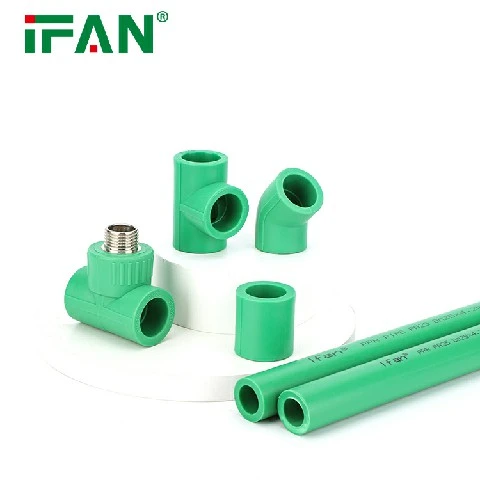
The most common point of failure in any piping system is the joint. PPR technology ingeniously solves this problem through thermal fusion welding. Unlike mechanical joints that rely on friction, deformation, or chemical bonds, the fusion process creates a permanent, homogeneous, and monolithic connection. The polymer chains of the pipe and fitting interdiffuse during heating, creating a single, continuous piece of material upon cooling. This joint is consistently as strong as the pipe itself and is immune to the gradual degradation that can affect gaskets, threads, or solvent-cemented connections. This fundamental engineering triumph is the single greatest contributor to the system's legendary leak-proof performance and 50-year service life.
4. Innate Resistance to Degradation and Corrosion
Long-term performance requires immunity to the common agents of decay that plague other materials. PPR is chemically inert, making it completely resistant to electrolytic corrosion, rust, and pitting-the primary failure mechanisms of metal pipes. It is also highly resilient to the chemical aggressiveness found in various water supplies and soils. Furthermore, the ultra-smooth inner surface of PPR prevents the accumulation of limescale and mineral deposits, which can constrict flow, foster bacterial growth, and lead to under-deposit corrosion in metal pipes. This scale resistance ensures that the system's hydraulic efficiency and water quality remain uncompromised for decades.
5. Exceptional Thermal Stability and Pressure Handling
A system's ability to withstand decades of thermal and pressure cycling is a true test of its engineering. PPR is designed for sustained operation at high temperatures and pressures, typically rated for continuous hot water service at 70°C and pressures corresponding to its PN rating (e.g., PN 20 or PN 25). The material exhibits excellent creep resistance, meaning it maintains its shape and strength under constant mechanical and thermal stress. Its flexibility allows it to absorb minor pressure surges (water hammer) and thermal expansion without suffering from fatigue cracks or stress fractures, a common issue in more rigid piping materials.
6. Engineered for Real-World Environmental Stress
Beyond internal fluid transport, PPR fittings are engineered to withstand external environmental challenges. The material is an excellent electrical insulator, eliminating any risk of damage from stray electrical currents. It is also resistant to abrasion and the chemical compounds commonly found in soil and building materials. For above-ground installations, PPR is resistant to UV radiation, although prolonged direct exposure is generally avoided through standard installation practices. This comprehensive resistance to a wide spectrum of environmental stressors ensures that the system's integrity is maintained regardless of the installation context.
7. Sustainability Through Longevity and Efficiency
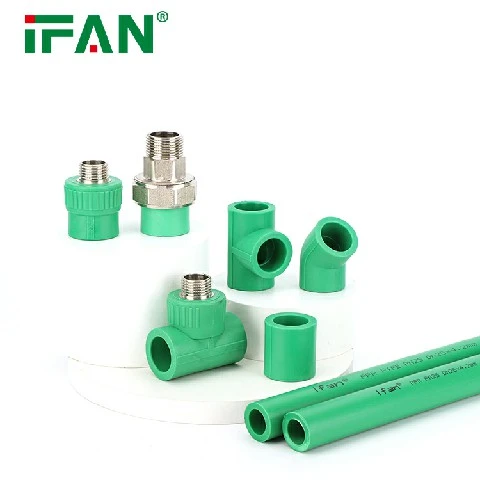
The long-term performance of PPR fittings directly translates into significant sustainability benefits. A system that lasts long-term durability according to standards or more drastically reduces the resource consumption, waste, and environmental disruption associated with multiple replacement cycles of inferior materials. The fusion-joining process itself is a clean technology, requiring no chemical solvents or open flames. Additionally, the excellent thermal insulation properties of PPR reduce heat loss in hot water circuits, lowering energy consumption over the system's entire lifespan. This combination of durability, clean installation, and operational efficiency makes PPR an environmentally responsible engineering choice.
8. Conclusion: A Legacy of Engineered Reliability
In conclusion, the long-term performance of PPR fittings is the result of a holistic engineering approach. From the advanced polymer chemistry of PP-RCT to the revolutionary fusion joint that creates a seamless system, every aspect is optimized for durability. Its inherent resistance to corrosion, scaling, and thermal stress ensures that performance does not degrade over time. By choosing PPR, specifiers and installers are not just selecting a product; they are investing in a proven, engineered solution designed to provide silent, reliable, and maintenance-free service for the lifetime of a building. This legacy of reliability is what sets PPR apart as a truly engineered-for-performance piping system.