
PVC Valves: Lightweight and Sturdy – A Comprehensive Evaluation
1. Material Advantages: Corrosion Resistance & Cost Efficiency
Superior Corrosion Resistance: PVC valves excel in environments where metal valves (e.g., brass, stainless steel) may corrode, such as in acidic, alkaline, or saline water systems. This makes them ideal for chemical processing, wastewater treatment, and aquaculture.
Lower Cost: PVC valves are significantly cheaper than brass or stainless steel alternatives, offering a budget-friendly solution for large-scale installations or projects with cost constraints.
Lightweight Design: PVC's low density (1.4 g/cm³) reduces transportation and installation costs, while its ruggedness ensures durability in standard operating conditions.IFAN factory 30+ years manufacture experience support color /size customization support free sample.Welcome to consult for catalog and free samples.This is our Facebook Website:www.facebook.com.
2. Performance Limitations: Pressure & Temperature Constraints
Pressure Rating:
Standard PVC ball valves are typically rated for 150 PSI at 73°F (23°C), but this drops as temperature increases. For example, at 140°F (60°C), the rating may fall to 60 PSI.
Industrial-grade PVC valves can handle up to 230 PSI, but this is still far below brass (~600 PSI) or stainless steel (~1,000+ PSI).
Temperature Sensitivity:
PVC degrades above 140°F (60°C), becoming brittle near freezing temperatures. This limits its use in high-temperature applications like steam systems or cold climates without insulation.
CPVC Variant: Chlorinated PVC (CPVC) can withstand temperatures up to 200°F (93°C), offering a higher-temperature alternative for hot water systems.
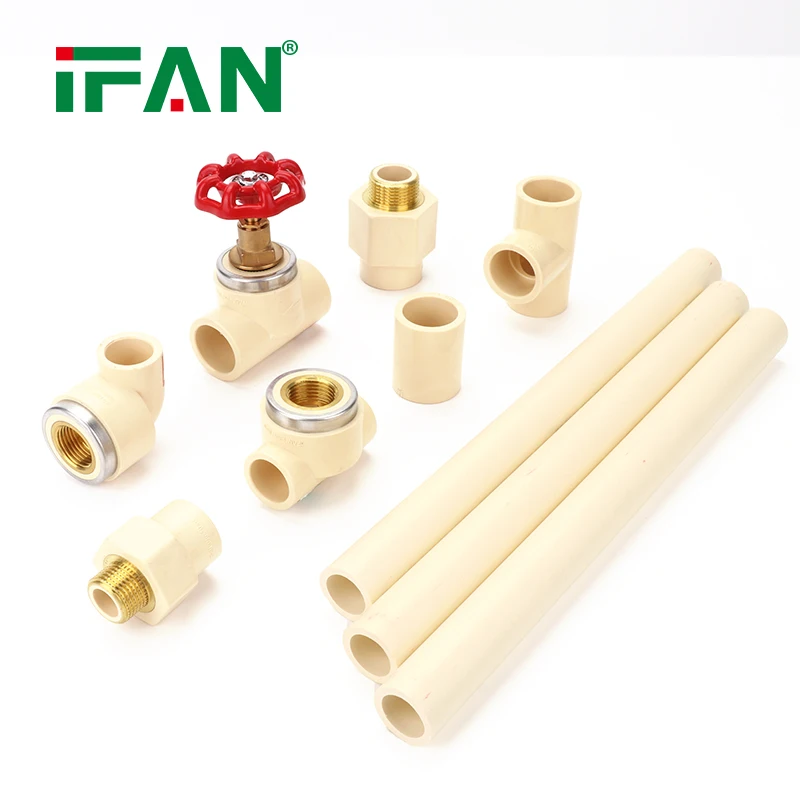
3. Structural Robustness: Design & Application Fit
Ball Valves:
Quarter-turn operation for quick shutoff, with full-port designs minimizing flow restriction.
Suitable for on/off control in low-pressure systems (e.g., irrigation, pool plumbing).
Butterfly Valves:
Lightweight and compact, ideal for large-diameter pipelines (e.g., 1.5"–12") where space is limited.
Wafer or lugged designs allow easy installation between flanges.
Diaphragm Valves:
Use a flexible diaphragm for precise flow control, common in pharmaceutical or food-grade applications requiring sanitary conditions.
4. Comparative Analysis: PVC vs. Metal Valves
| Factor | PVC Valves | Brass/Stainless Steel Valves |
|---|---|---|
| Corrosion Resistance | Excellent (chemical-resistant) | Good (but may tarnish or pit over time) |
| Pressure Rating | 150–230 PSI (temperature-dependent) | 600–1,000+ PSI (consistent across temperatures) |
| Temperature Range | Up to 140°F (PVC), 200°F (CPVC) | -40°F to 400°F+ (brass/stainless) |
| Cost | Low | High |
| Weight | Lightweight | Heavy |
| Applications | Residential, commercial, light industrial | High-pressure industrial, HVAC, plumbing |
5. Recommendations: When to Choose PVC Valves
Best For:
Low-pressure systems (e.g., irrigation, aquariums, pool filtration).
Corrosive environments where metal valves would fail (e.g., chemical storage, wastewater treatment).
Budget-conscious projects requiring lightweight, easy-to-install valves.
Avoid For:
High-pressure applications (e.g., compressed air, steam systems).
Extreme temperatures (below freezing or above 140°F without CPVC).
Critical systems where valve failure could cause safety hazards (e.g., fire sprinklers, gas lines).
6. Key Takeaways
PVC valves offer a compelling combination of lightweight construction, corrosion resistance, and cost savings, making them a practical choice for many residential and commercial applications. However, their pressure and temperature limitations necessitate careful selection to avoid system failures. For high-performance or safety-critical systems, metal valves remain the superior option despite their higher cost.
Final Verdict: PVC valves are a sturdy, lightweight solution for low-pressure, non-extreme environments, but always verify pressure/temperature ratings and application compatibility before installation.