
Introduction
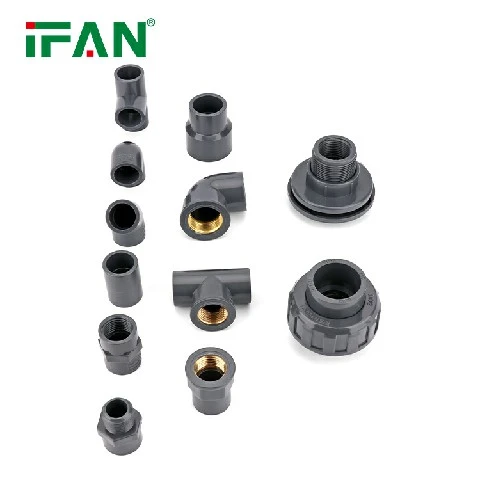
Unplasticized Polyvinyl Chloride (UPVC) has become a cornerstone material in modern piping systems due to its exceptional mechanical properties and cost-effective performance. Among the most crucial characteristics that determine its suitability for plumbing and industrial applications are its temperature and pressure resistance. Understanding how UPVC fittings perform under different thermal and hydraulic conditions helps engineers, contractors, and system designers select the right components for long-term efficiency and safety. This article provides an in-depth analysis of the temperature and pressure performance of GB UPVC fittings, examining their behavior under stress, thermal expansion tendencies, and overall reliability in various environmental conditions.IFAN factory 30+ years manufacture experience support color /size customization support free sample.Welcome to consult for catalog and free samples.This is our Facebook Website:www.facebook.com.
Material Characteristics Influencing Performance
UPVC is a rigid thermoplastic material derived from the polymerization of vinyl chloride without added plasticizers. This unplasticized composition enhances structural rigidity while minimizing flexibility. Its molecular structure gives UPVC fittings the strength to resist high internal pressures and external mechanical forces. At the same time, it limits the material's tolerance for extremely high temperatures. The balance between rigidity and stability defines UPVC's core performance advantages-making it ideal for cold and medium-temperature water systems where strength, corrosion resistance, and dimensional accuracy are required.
Temperature Range and Operating Limits
UPVC fittings perform best within a specific temperature range, generally between 0°C and 60°C. Within this range, they maintain structural integrity and pressure resistance without significant deformation. As the temperature approaches 60°C, UPVC begins to lose tensile strength and stiffness due to molecular relaxation. Continuous exposure to temperatures beyond this point can cause softening, leading to a reduction in service life. For applications involving heated water, alternative materials such as CPVC or PPR are preferred. However, for cold-water transport, irrigation, and industrial fluid systems, UPVC provides unmatched stability and reliability within its operational range.
Pressure Ratings and Load-Bearing Capacity
Pressure performance is one of the most significant advantages of UPVC fittings. These components are designed to handle a wide range of pressures, often categorized by nominal pressure (PN) ratings such as PN10, PN12.5, or PN16, indicating their capacity to withstand internal water pressure in bars. The rigid structure of UPVC ensures minimal expansion under pressure, maintaining consistent performance even in demanding conditions. Unlike flexible materials, UPVC does not deform easily, which reduces the risk of leakage at joints and extends the life of the entire piping network. However, pressure ratings must always be adjusted according to operating temperature, as elevated heat slightly reduces the safe working pressure.
Impact of Temperature on Pressure Capacity
Temperature and pressure in UPVC systems are interrelated. As the temperature rises, the ability of the fittings to sustain high internal pressures diminishes. For instance, at 20°C, a UPVC fitting rated at PN16 can withstand full pressure safely. But at 50°C, its pressure tolerance typically reduces to around 60%–70% of that capacity. This reduction occurs due to softening and molecular relaxation at higher temperatures. Engineers account for this by applying derating factors when designing systems that operate near the upper temperature limit. This ensures long-term durability and prevents premature failure under fluctuating thermal conditions.
Thermal Expansion and Dimensional Stability
Although UPVC is relatively resistant to thermal expansion compared to other plastics, it still undergoes minor dimensional changes when exposed to varying temperatures. The coefficient of linear expansion for UPVC is approximately 0.06 mm/m/°C, meaning that a 10-meter pipe may expand by about 6 mm when the temperature increases by 10°C. Proper system design includes expansion joints or flexible couplings to accommodate these changes and prevent undue stress on fittings. In well-engineered systems, this expansion is predictable and easily controlled, maintaining joint integrity and preventing misalignment or cracking.
Performance in Hot and Cold Water Applications
UPVC fittings are best suited for cold-water applications such as potable water supply, irrigation, and drainage systems. In these scenarios, their pressure performance remains consistent and reliable. However, in moderate-temperature environments, such as warm-water distribution or certain industrial cooling systems, UPVC can still perform effectively if the design accounts for temperature derating. For hot-water or steam applications, materials with higher thermal resistance like CPVC or metal fittings are typically used. The key advantage of UPVC lies in its ability to handle high pressures in cold systems without corrosion or chemical degradation, offering long-lasting performance with minimal maintenance.
Behavior Under Dynamic Pressure Conditions
In real-world piping systems, pressure is not always constant. Dynamic pressure events, such as water hammer or surge pressure, can occur during sudden valve closures or pump startups. UPVC fittings exhibit excellent resistance to short-term pressure surges due to their rigidity and smooth internal surfaces, which minimize turbulence. However, excessive or repeated surges beyond design limits can still cause stress cracking or joint failure. To prevent this, engineers often install pressure relief valves or surge arrestors in UPVC networks, ensuring the system operates within safe limits under variable hydraulic conditions.
Resistance to Environmental Stress and Aging
Environmental factors such as UV radiation, temperature fluctuations, and mechanical loading can influence the long-term performance of UPVC fittings. When installed outdoors or in exposed conditions, continuous sunlight can cause gradual surface degradation, leading to embrittlement. To mitigate this, manufacturers often include UV stabilizers or recommend protective coatings. Under normal indoor or buried conditions, UPVC exhibits remarkable aging resistance, maintaining its temperature and pressure characteristics for decades. The material's immunity to corrosion and scaling further contributes to its enduring stability across a wide range of operating environments.
Comparative Performance with Other Materials
When compared with other piping materials, UPVC demonstrates superior pressure resistance among non-flexible plastics. Polyethylene (PE) and Polypropylene (PP) are more flexible but tend to deform under high pressures. CPVC offers better thermal performance but comes at a higher cost and requires specialized joining methods. Metal pipes like copper and steel can handle higher temperatures but are prone to corrosion and scale buildup. UPVC fittings strike a practical balance-providing high pressure capacity, low maintenance, and resistance to most chemicals-making them ideal for cost-sensitive water distribution systems and industrial processes.

Design Considerations for Optimal Performance
Designing a system that fully utilizes the capabilities of UPVC fittings requires careful planning. Engineers must select fittings rated for both the expected pressure and operating temperature of the system, while accounting for potential fluctuations. Proper support spacing, expansion allowances, and joint alignment are critical for maintaining integrity. Using high-quality solvent cement and ensuring correct installation procedures are equally essential to prevent leaks or joint failures. Regular inspections, especially in high-pressure systems, help sustain the desired performance over long periods of service.
Conclusion
The temperature and pressure performance of UPVC fittings make them an indispensable component in modern water supply, irrigation, and industrial piping networks. Their ability to maintain structural strength under pressure, combined with excellent chemical and corrosion resistance, ensures dependable operation in a variety of environments. While their upper temperature limit may restrict use in high-heat applications, within their optimal range, UPVC fittings deliver unmatched stability, cost-efficiency, and longevity. By understanding and applying the appropriate design and installation practices, engineers can harness the full potential of UPVC fittings, ensuring safe, efficient, and sustainable piping systems for decades to come.