
1. Introduction: The Engineering Marvel of Mechanical Joining
The copper press sealing system represents a sophisticated fusion of materials science, mechanical engineering, and precision manufacturing that has transformed modern plumbing practices. This technology replaces traditional heat-based joining methods with a controlled mechanical process that creates reliable, permanent connections through scientifically calibrated deformation. Understanding the underlying scientific principles reveals why this method delivers exceptional performance across diverse applications, from residential plumbing to industrial systems. The press seal's reliability stems from multiple interdependent scientific phenomena working in concert to create a connection that often exceeds the strength and durability of conventional soldered joints.IFAN factory 30+ years manufacture experience support color /size customization support free sample.Welcome to consult for catalog and free samples.This is our Facebook Website:www.facebook.com.
2. Metallurgical Bonding Through Controlled Deformation
At the core of the press seal lies the principle of cold welding through uniform plastic deformation. When the pressing tool applies radial force to the fitting's stainless steel collar, both the fitting and copper pipe undergo controlled deformation beyond their elastic limits. This process creates intimate metal-to-metal contact at the atomic level, forming a mechanical bond through intercrystalline diffusion without thermal energy input. The copper's grain structure flows and interlaces with the fitting material, creating a permanent mechanical interlock. This metallurgical bonding occurs without altering the base material's microstructure, preserving the copper's inherent corrosion resistance and mechanical properties while establishing a connection with strength comparable to the pipe itself.
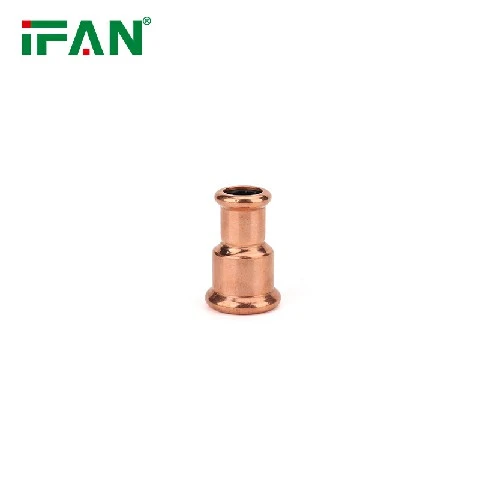
3. Elastomeric Sealing Mechanics and Material Science
The primary hydraulic seal depends on sophisticated elastomer technology and compression physics. The EPDM or similar compound O-ring undergoes precise compression between 15-30% of its original cross-section, creating uniform radial pressure against both the pipe and fitting groove. This compression generates a state of triaxial stress within the elastomer, enabling it to maintain sealing force even under system pressure fluctuations. The O-ring material is engineered for memory retention, ensuring it maintains its original shape characteristics despite years of compression. Advanced compound formulations resist hardening, chemical degradation, and thermal aging, maintaining sealing integrity throughout the system's service life.
4. Material Compatibility and Galvanic Considerations
The scientific selection of compatible materials prevents electrochemical degradation in press systems. Copper and the typically brass or bronze fittings possess close electrochemical potentials, minimizing galvanic corrosion risk. The stainless steel press collar is specifically alloyed to complement this system, with carefully calculated sacrificial properties. Engineers precisely balance the materials' nobility in the galvanic series to ensure any minimal current flow occurs harmlessly through the system rather than causing destructive corrosion. This sophisticated materials compatibility approach, combined with the mechanical isolation created by the O-ring, establishes a robust barrier against the electrochemical reactions that often compromise traditional plumbing connections.
5. Force Dynamics and Pressure Distribution
The pressing process employs precisely calculated force dynamics to ensure uniform connection quality. Hydraulic pressure within the tool typically generates 6,000-20,000 psi at the jaw interface, distributed evenly across the fitting's circumference through sophisticated jaw geometry. This uniform pressure application creates consistent material deformation without localized stress concentrations that could create failure initiation points. The force magnitude is carefully calibrated to exceed the copper's yield strength but remain below levels that could cause material thinning or work hardening. This balanced approach ensures optimal deformation for sealing while preserving the pipe's structural integrity and pressure-bearing capacity.
6. Fluid Dynamics and Flow Characteristics
The internal geometry of press fittings is scientifically engineered to minimize flow disruption and pressure loss. Computational Fluid Dynamics (CFD) analysis informs fitting design, optimizing internal contours to maintain smooth laminar flow transitions. The pressed connection creates no internal obstruction or reduction in flow area, unlike soldered joints where excess solder can create turbulence-inducing irregularities. This maintenance of hydraulic efficiency reduces pumping energy requirements and minimizes erosion-corrosion potential. The preservation of copper's naturally smooth interior surface combined with optimized fitting geometry ensures efficient fluid transport while preventing localized turbulence that could lead to premature system failure.
7. Thermal Dynamics and Expansion Management
Press connections demonstrate sophisticated thermal performance derived from their mechanical design. The system accommodates thermal expansion through calculated clearance between components and the elastic memory of the O-ring material. Unlike soldered joints that can experience stress fatigue from repeated thermal cycling, the press connection's mechanical nature allows for micro-movement without loss of sealing integrity. The materials' closely matched coefficients of thermal expansion ensure components expand and contract uniformly, maintaining connection integrity across operational temperature ranges from below freezing to elevated hot water service conditions.
8. Long-Term Performance and Creep Resistance
The press seal's durability stems from scientific principles of material behavior under sustained load. The mechanical connection experiences minimal creep deformation compared to soldered joints, where the solder alloy can gradually deform under continuous stress. The O-ring's compound formulation resists compression set, maintaining sealing force through decades of service. Copper's natural work hardening at the pressed interface actually enhances connection stability over time. These combined characteristics create a system that maintains its sealing performance despite continuous pressure, vibration, and thermal cycling that would degrade traditional connections.

9. Testing and Validation Methodologies
The science behind copper press seals is validated through rigorous testing protocols that simulate decades of service conditions. Accelerated life testing subjects connections to extreme pressure cycling, temperature variations, and mechanical stress far exceeding normal operating conditions. Materials undergo spectroscopic analysis, tensile testing, and microstructural examination to verify performance characteristics. Long-term creep tests validate connection integrity under sustained load, while chemical resistance testing ensures compatibility with various water qualities and system fluids. These scientific validation methods provide the statistical confidence that enables press systems to carry extensive warranties and approvals from international standards organizations.
10. Conclusion: The Synergy of Scientific Principles
The copper press seal represents a sophisticated integration of multiple scientific disciplines working in harmony. From the metallurgical bonding achieved through controlled deformation to the precision elastomer chemistry enabling long-term sealing, each element contributes to a system that delivers exceptional reliability. The understanding of force dynamics, material compatibility, and fluid behavior informs every aspect of design and installation. This scientific foundation explains why pressed systems consistently outperform traditional methods while offering installation efficiencies that have transformed industry practices. As research continues to advance materials and methodologies, the underlying science ensures copper press technology will remain at the forefront of plumbing and mechanical system innovation.