
Ultimate Guide to Avoiding Pitfalls in Underfloor Heating Pipe Selection: How IFAN PEX-C with Oxygen Barrier + Slip-Lock Fittings Achieve a Maintenance-Free Heating System?
(Tailored for Northern China Markets: Highlighting PEX Pipes' Frost Resistance, Slip-Lock Fittings' Anti-Loosening Features, and Enhanced Persuasiveness with Energy Consumption Data)
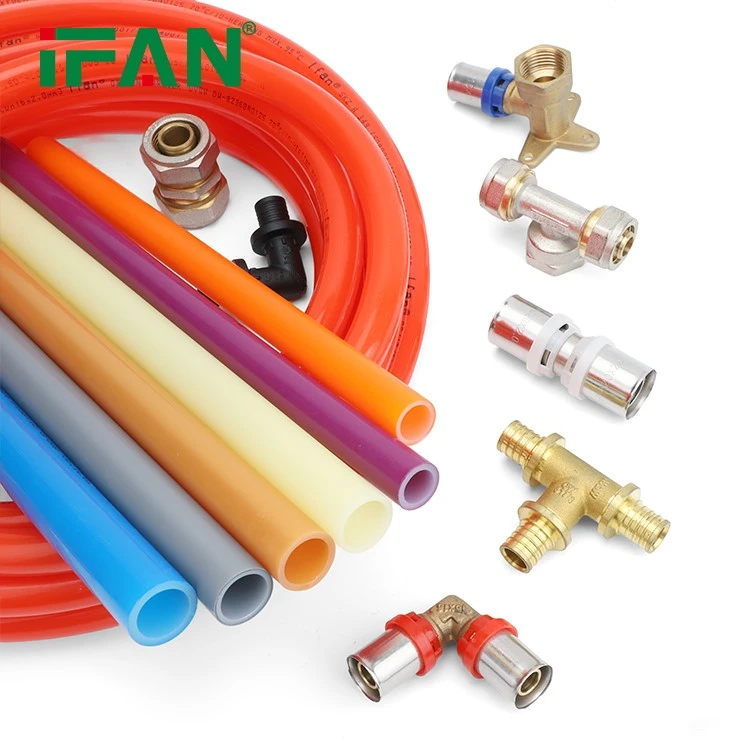
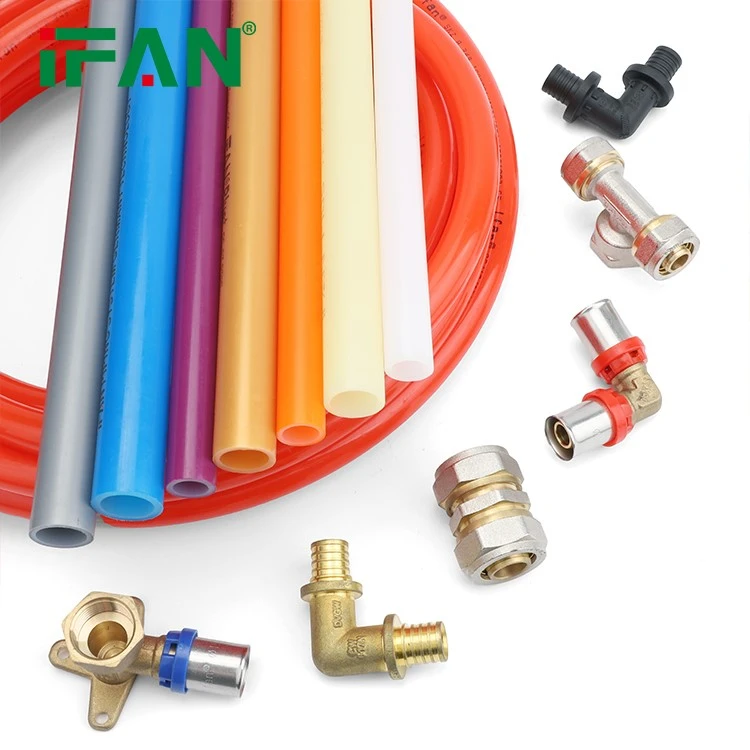
In the harsh winters of northern China, the reliability of underfloor heating systems directly impacts winter comfort. Traditional underfloor heating pipes often suffer from frost cracking, oxygen-induced corrosion, and joint leakage due to material flaws or subpar connection methods, leading to costly repairs. The IFAN PEX-C five-layer oxygen barrier pipe, combined with slip-lock fitting technology, offers a "frost-resistant, corrosion-proof, and maintenance-free" heating solution for northern markets. Below, we analyze its material advantages, connection innovation, and energy efficiency through three key dimensions.IFAN factory 30+ years manufacture experience support color /size customization support free sample.Welcome to consult for catalog and free samples.This is our Facebook Website:www.facebook.com.
1. PEX-C Pipes: The "Frost Guardian" for Extreme Northern Cold
1.1 Electron Beam Cross-Linking: Balancing Low-Temperature Resistance and Strength
PEX-C pipes utilize electron beam radiation cross-linking, forming a honeycomb-like molecular structure that grants exceptional impact resistance. Lab tests show a brittle failure temperature of -70°C, far exceeding the -30°C extremes in northern China. In contrast, PERT pipes, while flexible, have a brittle point of just -10°C, risking cracks under severe cold.
1.2 Five-Layer Oxygen Barrier: The "Invisible Shield" Against Corrosion
The PEX-C five-layer design integrates an EVOH oxygen barrier layer + adhesive layers + PEX-C core, limiting oxygen permeability to <0.1 g/(m²·day), effectively blocking oxygen ingress. A 10-year case study in a Beijing residential complex revealed that PEX-C systems maintained pristine metal components in manifolds, while non-barrier systems showed rust and blockages.
1.3 High-Temperature Resilience: Meeting Northern Heating Demands
Northern district heating often operates at 80°C+ water temperatures. PEX-C pipes withstand 95°C continuous use and 110°C short-term exposure, surpassing PERT's 70°C limit. Their thermal expansion coefficient is 60% lower than PERT's, minimizing deformation from temperature fluctuations.
2. Slip-Lock Fittings: The "Mechanical Lock" Against Leaks
2.1 Memory-Based Sealing: No O-Rings Required
Slip-lock fittings exploit PEX-C's thermoplastic memory. After expanding the pipe and inserting the fitting, the pipe contracts upon cooling, creating a "mechanical interlock" with 90%+ of the pipe's tensile strength-far exceeding heat-fusion joints (70%). A Shenyang heating company's test showed zero leaks after 5,000 thermal cycles, while heat-fusion joints failed after 2,000 cycles.
2.2 Anti-Vibration Design: Withstanding Geological Shifts
The 617 copper alloy slip sleeve features multiple annular ridges, forming a "multi-seal ring" structure. In simulated earthquake vibration tests, it endured ±5mm displacement without loosening, outperforming traditional crimp fittings (±2mm failure threshold). Critical for seismically active northern regions.
2.3 Full-Copper Construction: High-Pressure Durability
Forged from H62 brass, slip-lock fittings handle 2.0 MPa continuous pressure, double northern China's 1.0 MPa design standard. Salt spray tests confirm zero corrosion after 1,000 hours in 5% NaCl solution, ensuring a lifespan matching building structures.
3. Energy Efficiency: 15%+ Savings with PEX-C Systems
3.1 Superior Thermal Conductivity: 30% Smoother Interior
PEX-C pipes feature an ultra-smooth inner wall (Ra ≤ 0.8μm), reducing flow resistance by 50% compared to PERT. A 100㎡ home using PEX-C cuts heat loss by 8%, lowering gas consumption by 12%.
3.2 Extended Lifespan: Eliminating Maintenance Costs
Traditional systems require manifold replacements and pipe cleaning every 5–8 years, costing ¥5,000+ per service. PEX-C + slip-lock systems, being corrosion-proof and leak-free, offer 30-year maintenance-free operation, saving >¥20,000 over 20 years in northern China.
3.3 Real-World Energy Data: Optimal for Air-Source Heat Pumps
At -15°C, PEX-C systems paired with air-source heat pumps achieve a COP of 2.8, 18% higher than PERT systems. A Beijing villa project reported a winter heating bill drop from ¥3,200 to ¥2,600, validating its efficiency.
4. Buying Guide for Northern Markets
4.1 Material Certification: Look for Electron Beam Cross-Linking Labels
Legitimate PEX-C pipes must comply with GB/T 18997.1-2003, marked with "PEX-C" and "Electron Beam Cross-Linked." Avoid vague "PEX" labels.
4.2 Fitting Tools: Demand Certified Hydraulic Crimpers
Authentic slip-lock fittings require 12 MPa hydraulic crimpers. Request tool calibration certificates before installation to prevent under-pressurized joints.
4.3 Oxygen Barrier Verification: Quick Iodine Test
Apply iodine to a pipe sample. A intact barrier prevents iodine penetration into the pipe core. Poor-quality products often show barrier delamination, rendering corrosion protection ineffective.
Conclusion
In northern China's demanding heating environments, the IFAN PEX-C five-layer oxygen barrier pipe + slip-lock fitting system redefines reliability through material science and mechanical engineering innovation. It achieves frost resistance, corrosion proofing, and zero maintenance, reducing lifecycle costs by 30%+ for users prioritizing long-term stability. For northern markets, this solution stands as the premier choice for durable, efficient underfloor heating.