
Introduction
Joint integrity is a defining factor in the long-term reliability of PPR piping systems. Because PPR fittings rely on thermal fusion rather than mechanical sealing, the quality of the fused joint directly determines system performance. After thermal fusion, the joint must withstand pressure, temperature variation, and mechanical stress without leakage or degradation. Understanding how joint integrity is formed, evaluated, and maintained helps designers, installers, and inspectors ensure durable and safe plumbing systems.IFAN factory 30+ years manufacture experience support color /size customization support free sample.Welcome to consult for catalog and free samples.This is our Facebook Website:www.facebook.com.
Principle of Thermal Fusion in PPR Systems
Thermal fusion involves heating the pipe and fitting surfaces to a controlled temperature until the material softens, then joining them under proper alignment and pressure. During this process, the polymer chains at both surfaces become mobile and interdiffuse. Once cooled, these chains solidify into a single continuous structure. The result is not a simple connection but a homogeneous joint where the fitting and pipe effectively become one material body.
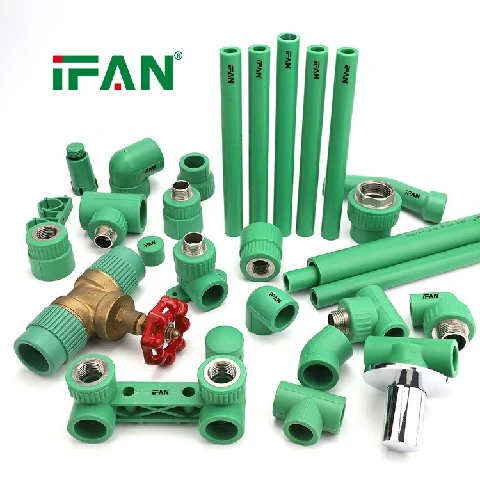
Formation of a Homogeneous Joint Structure
After proper thermal fusion, the joint zone shows no clear boundary between pipe and fitting. Material flow during heating creates a uniform melt layer, and controlled insertion pressure ensures even distribution. As cooling occurs, molecular entanglement locks the structure together. This homogeneous joint eliminates weak interfaces that are common in mechanical connections, providing uniform strength across the entire connection area.
Material Behavior During Heating and Cooling
PPR material exhibits predictable behavior during heating and cooling, which is essential for joint integrity. When heated within the specified temperature range, the material softens without degrading. During cooling, it regains stiffness while retaining the fused molecular structure. Controlled cooling is critical, as premature movement or external stress during this phase can disrupt molecular bonding and weaken the joint.
Dimensional Accuracy and Alignment Effects
Joint integrity depends heavily on dimensional accuracy and proper alignment during fusion. Correct socket depth, roundness, and pipe end preparation ensure full contact between mating surfaces. Misalignment or insufficient insertion depth can create uneven fusion zones or internal voids. Accurate dimensions allow uniform heat transfer and material flow, which are essential for consistent joint strength.
Visual Characteristics of a Sound Fusion Joint
A properly fused PPR joint displays clear visual indicators of integrity. An even, symmetrical fusion bead around the fitting socket indicates correct heating and insertion. The bead should be smooth and continuous, without gaps, burn marks, or excessive material buildup. While visual inspection alone cannot confirm internal bonding, it provides a first-level assessment of fusion quality.
Mechanical Strength of Fused Joints
Thermally fused PPR joints typically exhibit mechanical strength equal to or greater than the pipe itself. Tensile and pull-out tests show that failure often occurs in the pipe wall rather than at the joint. This performance confirms that proper fusion creates a structurally continuous connection capable of resisting internal pressure, external loads, and installation stresses.
Pressure and Leak Resistance
Joint integrity after thermal fusion is critical for pressure performance. A fully fused joint distributes internal pressure evenly across the joint area, minimizing stress concentration. Hydrostatic testing demonstrates that correctly fused joints maintain leak-free performance under both short-term and long-term pressure conditions. This reliability makes PPR fittings suitable for concealed installations where future access is limited.
Influence of Installation Parameters
Heating temperature, heating time, insertion force, and cooling time all influence joint integrity. Deviations from recommended parameters can result in incomplete fusion, material degradation, or internal stress. Overheating may weaken the material, while underheating can prevent proper molecular bonding. Strict adherence to installation guidelines is essential for achieving consistent joint quality.
Long-Term Stability Under Thermal Cycling
After fusion, joints must endure repeated temperature changes throughout their service life. Because the joint is homogeneous, it expands and contracts at the same rate as the pipe. This uniform thermal response prevents differential movement and micro-gaps that could compromise integrity. Long-term testing shows that properly fused joints maintain strength and sealing performance even after extensive thermal cycling.

Inspection and Testing of Joint Integrity
Manufacturers and installers use various methods to verify joint integrity. These include visual inspection, pressure testing, and destructive testing during quality control processes. In critical applications, sample joints may undergo sectioning or tensile testing to confirm internal fusion quality. Such inspections provide confidence that installation practices and material quality meet performance requirements.
Common Causes of Joint Integrity Failure
Failures in joint integrity are usually linked to improper installation rather than material defects. Common causes include incorrect heating temperature, contaminated surfaces, misalignment, and premature movement during cooling. Understanding these risks allows installers to implement corrective measures and maintain consistent fusion quality across the system.
Conclusion
Joint integrity in PPR fittings after thermal fusion is the result of controlled material behavior, precise dimensions, and correct installation procedures. Through molecular interdiffusion and homogeneous joint formation, thermal fusion creates connections that match or exceed the strength of the pipe itself. When properly executed, these joints provide excellent pressure resistance, thermal stability, and long-term reliability. Understanding the factors that influence joint integrity ensures that PPR piping systems perform safely and effectively throughout their service life.