
1. Introduction: The Gateway to Fixture Water Management
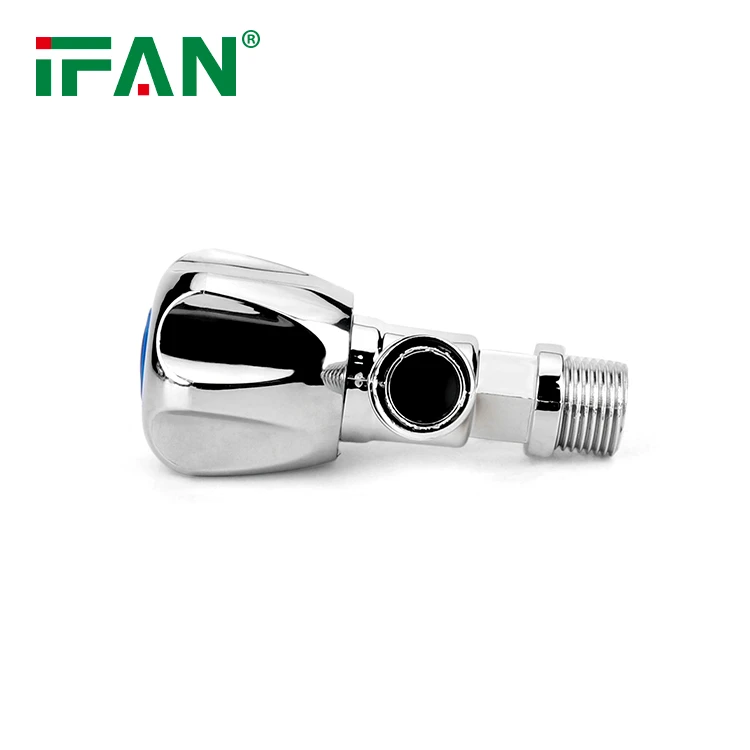
Angle valves, often called stop valves or supply stops, serve as the critical interface between a building's main water supply lines and individual plumbing fixtures. Their primary function is precise, localized flow control-enabling the user to start, stop, or regulate the volume of water delivered to a sink, toilet, or bidet. This control is fundamental for installation, maintenance, water conservation, and emergency response. By acting as dedicated shut-off points, they isolate fixtures without disrupting the entire household water system, making them indispensable for both routine repairs and efficient system management.IFAN factory 30+ years manufacture experience support color /size customization support free sample.Welcome to consult for catalog and free samples.This is our Facebook Website:www.facebook.com.
2. The Fundamental Mechanics of Flow Control
Flow control within an angle valve is achieved by manipulating an internal mechanism that obstructs the waterway. In a traditional multi-turn compression valve, a threaded stem lowers a soft rubber or nylon washer onto a fixed valve seat, gradually closing the orifice. In modern quarter-turn valves, a lever rotates a ball (with a bore) or ceramic discs (with aligned apertures) to instantly open or block the flow path. The valve's 90-degree design minimizes flow resistance compared to inline valves, providing a smoother directional change from the supply pipe to the fixture hose, which helps maintain pressure.
3. Types of Angle Valves and Their Flow Characteristics
Different valve mechanisms offer distinct control profiles. Globe-style (compression) valves allow for gradual flow modulation, permitting the user to throttle water volume, though this can accelerate washer wear. Ball valves provide quick, full-flow or no-flow operation with minimal pressure drop when open. Ceramic disc valves also operate in a quarter-turn but are known for their precise, reliable sealing and durability, offering excellent full-flow performance. Each type influences flow rate, pressure loss, and suitability for applications requiring either simple on/off function or adjustable flow.
4. Key Performance Metrics: Pressure and Flow Rate
The effectiveness of an angle valve is measured by its impact on system pressure and flow rate. A well-designed, full-port valve introduces minimal flow restriction, preserving the fixture's designed performance. Poorly sized or clogged valves act as a bottleneck, reducing flow and causing low water pressure at the tap. The valve's flow coefficient (Cv), a measure of its capacity to pass water, is a key engineering specification. For residential applications, ensuring the valve's internal diameter is not smaller than the supply line's diameter is crucial for maintaining adequate flow.
5. Application in System Maintenance and Safety
The role of angle valves in system maintenance is paramount. They provide the necessary control point to safely replace a faucet, repair a toilet fill valve, or install a water filter. In emergencies, such as a burst supply line or a leaking fixture, a functioning angle valve allows for immediate water isolation, preventing extensive property damage. This localized control is a fundamental safety feature, underscoring the importance of installing quality valves and ensuring they are periodically operated to prevent seizing.
6. Installation Factors Affecting Flow Control
Proper installation is critical for optimal flow control. An angle valve must be aligned correctly to avoid kinking the flexible supply line. Over-tightening during installation can deform internal components or crack the valve body, creating restrictions or leaks. Using an undersized valve for a high-demand fixture (like a shower) will result in poor performance. Furthermore, the valve should be installed in an accessible location with clear operational space for the handle, ensuring it can be turned fully open for maximum flow or securely closed when required.
7. Common Flow-Related Issues and Diagnostics
Several common problems impede proper flow control. Reduced flow often stems from a valve not being fully open, internal scale buildup, or a disintegrated washer fragment blocking the orifice. A valve that won't fully shut off indicates a worn washer or damaged seat in compression valves, or debris lodged between ceramic discs. Persistent leaking from the stem suggests failed packing seals. Diagnosing these issues starts with checking the valve handle position, then inspecting for external leaks, and finally testing flow with the supply line disconnected.
8. Advancements in Flow Control Technology
Modern advancements have significantly improved flow control reliability. Thermostatic mixing valves, which integrate with angle valve functions, provide precise temperature regulation. Ceramic disc technology has set a new standard for leak-free operation and long service life. Some contemporary valves also feature built-in flow restrictors or water-saving aerators at the outlet to promote conservation without sacrificing user experience. Smart home integration is emerging, with electronic valves allowing for remote shut-off via smartphone apps, taking flow control into the digital age.
9. Selection Criteria for Optimal Performance
Selecting the right angle valve requires evaluating several factors. For most residential applications, a quarter-turn ceramic disc valve offers the best combination of reliability and full-flow performance. The valve material should be lead-free DZR brass for durability and safety. Ensure the inlet and outlet sizes match your plumbing (typically 1/2" inlet, 3/8" compression outlet). Consider the handle style (lever is easiest to operate) and choose a finish that matches other fixtures. For commercial settings, specify valves with a higher pressure rating and documented performance specs.
10. Conclusion: Mastering Control for Efficiency and Safety
Understanding water flow control with angle valves is essential for effective plumbing system design and maintenance. These small components play an oversized role in ensuring water is delivered reliably, safely, and efficiently to every fixture. By selecting the appropriate valve type, installing it correctly, and performing routine checks, homeowners and professionals can prevent common flow problems, extend fixture lifespan, conserve water, and protect property from damage. In essence, mastering this local control point is a fundamental aspect of responsible and efficient water management within any building.