
Introduction
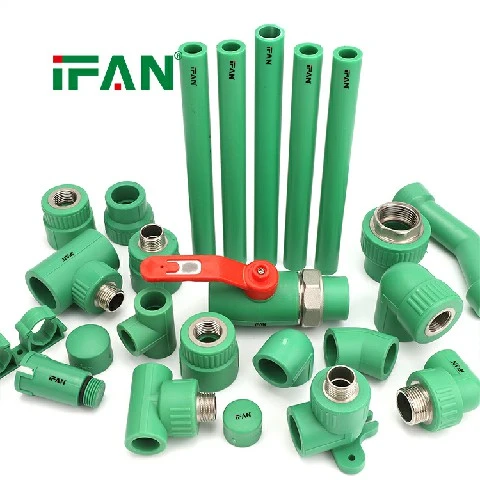
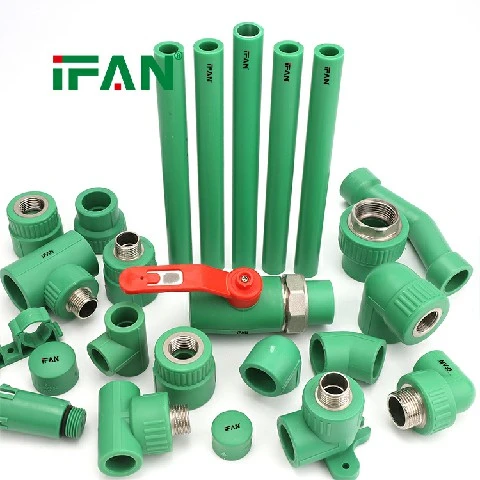
Concealed plumbing installations place high demands on the reliability and durability of piping systems. Once pipes and fittings are embedded in walls, floors, or ceilings, access for inspection or repair becomes extremely limited. For this reason, materials used in concealed systems must offer long-term stability, leak resistance, and minimal maintenance requirements. PPR fittings have become a preferred solution for concealed installations due to their material properties, connection technology, and proven performance in a wide range of operating conditions. Understanding these advantages explains why they are trusted for long-term hidden applications.IFAN factory 30+ years manufacture experience support color /size customization support free sample.Welcome to consult for catalog and free samples.This is our Facebook Website:www.facebook.com.
Homogeneous Fusion-Welded Connections
One of the most important reasons PPR fittings are suitable for concealed installations is the fusion welding connection method. Fusion welding creates a homogeneous joint in which the pipe and fitting become a single continuous material. This eliminates potential leak paths associated with mechanical joints, seals, or threads. Because there are no gaskets that can degrade over time, the risk of hidden leaks is significantly reduced. The uniform structure of fusion-welded joints provides long-term sealing reliability that is essential for concealed systems.
Resistance to Corrosion and Chemical Attack
PPR fittings are inherently resistant to corrosion, scale formation, and chemical attack. Unlike metal fittings, they do not react with water, dissolved minerals, or common construction materials. This corrosion resistance ensures that wall-embedded or floor-buried fittings maintain their integrity throughout their service life. The absence of rust or internal buildup also helps preserve water quality. For concealed installations where environmental exposure cannot be easily monitored, this chemical stability is a major advantage.
Stable Performance Under Temperature Variations
Concealed plumbing systems often experience repeated temperature changes, especially in hot and cold water distribution lines. PPR fittings are designed to handle these variations through controlled thermal expansion and material flexibility. The material absorbs movement without cracking or loosening joints. Fusion-welded connections expand and contract uniformly with the pipe, preventing stress concentration. This stable behavior under temperature cycling ensures consistent performance even when the system is hidden behind structural elements.
High Pressure and Load Resistance
PPR fittings are engineered to withstand continuous internal pressure and external loads associated with concealed installations. Once embedded, pipes may be subjected to structural forces from concrete, wall materials, or building movement. The mechanical strength and elasticity of PPR allow fittings to absorb these loads without failure. Properly installed PPR systems maintain dimensional stability and pressure resistance over time, making them suitable for long-term concealed use.
Low Maintenance Requirements
Concealed plumbing systems must operate reliably with minimal maintenance, as access is difficult and costly. PPR fittings require no periodic tightening, seal replacement, or corrosion protection. Their fusion-welded joints remain stable throughout the service life of the system. This low-maintenance nature reduces the likelihood of unexpected failures and eliminates the need for invasive repairs, which is particularly important in finished buildings.
Long Service Life and Aging Resistance
PPR materials are designed for long-term performance, with resistance to aging, oxidation, and environmental stress. Under normal operating conditions, PPR fittings can provide decades of reliable service. The material maintains its mechanical strength and flexibility over time, even when continuously exposed to water and temperature fluctuations. This long service life aligns well with the expected lifespan of concealed building components, supporting sustainable construction practices.
Compatibility with Modern Construction Methods
Modern construction increasingly favors integrated and concealed service systems for aesthetic and functional reasons. PPR fittings are lightweight and easy to handle, making them suitable for installation within complex building structures. Their compatibility with prefabricated components and modular construction techniques further supports concealed applications. Clean installation and precise fusion welding reduce the risk of installation defects that could compromise hidden systems.
Safety and Reliability Considerations
Hidden plumbing failures can cause significant structural damage and safety risks. PPR fittings contribute to overall system safety by providing reliable, leak-free performance. Their resistance to sudden fracture and fatigue reduces the risk of catastrophic failure. Additionally, the absence of metal components eliminates concerns related to galvanic corrosion or electrical conductivity, further enhancing safety in concealed environments.
Economic Benefits Over the System Lifecycle
While initial material selection is important, lifecycle cost is a key consideration for concealed installations. PPR fittings offer economic advantages through reduced maintenance, long service life, and low failure rates. The avoidance of repair work behind walls or under floors results in significant long-term cost savings. These economic benefits reinforce the suitability of PPR fittings for concealed plumbing systems.
Conclusion
PPR fittings are well suited for long-term concealed installations due to their fusion-welded joints, corrosion resistance, thermal stability, and mechanical strength. Their ability to operate reliably with minimal maintenance makes them ideal for applications where access is limited. By combining material durability with proven connection technology, PPR fittings provide a dependable solution that supports safe, efficient, and long-lasting concealed plumbing systems.