
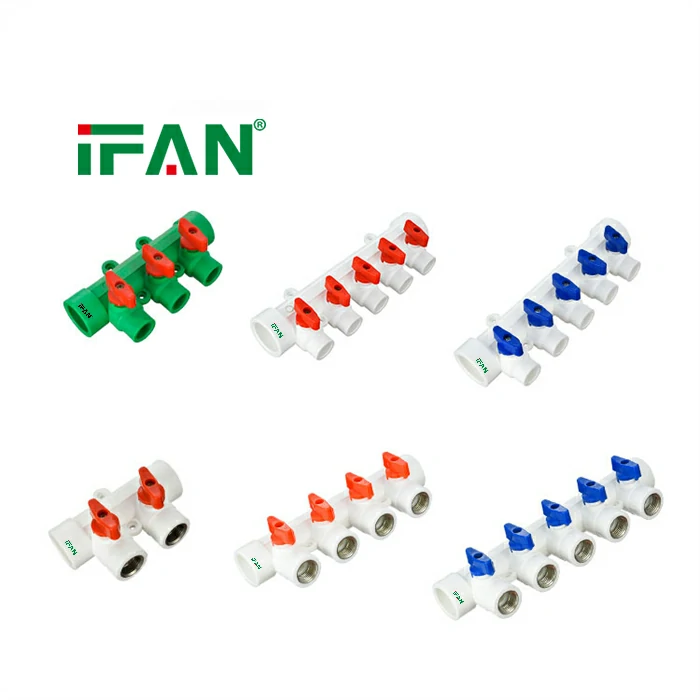
Durable Use PPR Fitting
Material:100% Hyosung
Size:20-110mm
Application:Pipe Lines Connect
OEM:Provide OEM Services
Sample:Sample Freely
Send Inquiry
Product Details ofDurable Use PPR Fitting
What Is a PPR End Cap and Its Core Purpose?
A PPR end cap is a one-port fitting designed to permanently seal the end of a PPR pipe, preventing water leakage, debris ingress, and insect infestation. Unlike removable plugs (which are temporary), end caps create a permanent, leak-proof seal via thermal fusion, making them ideal for finished plumbing systems where pipe ends will not need to be accessed. Made from 100% virgin PP-R resin, this fitting is non-toxic, BPA-free, and safe for drinking water, suitable for both hot and cold water systems. Its compact design fits seamlessly with PPR pipes, and its reinforced construction withstands system pressure (up to 10 bars) and continuous temperatures up to 95°C (203°F). The end cap's smooth internal surface prevents sediment buildup, and its uniform milky white color matches standard PPR pipes. Its core purpose is to provide a secure, long-lasting seal for permanent pipe ends in residential, commercial, and industrial plumbing systems.

Key Features to Look for When Buying a PPR End Cap
Buyers should focus on specific features to ensure they select a high-quality PPR end cap. First, size matching is critical-the end cap's port size must exactly match the PPR pipe's outer diameter (common sizes: 20mm, 25mm, 32mm, 40mm, 50mm, 63mm). The fusion depth should be correct for the pipe size: 16mm for 20mm pipes, 20mm for 25mm pipes, 25mm for 32mm pipes, and 32mm for 63mm pipes. The end cap's wall thickness should be reinforced to withstand pressure: 2.3mm for 20mm, 2.8mm for 25mm, and 4.4mm for 32mm. Look for a solid, one-piece construction-avoid end caps with seams or cracks, which can leak. The PP-R material should be 100% virgin (recycled PP-R is brittle and prone to cracking). Check for certifications such as ISO 15874 and GB/T 18742 to guarantee quality. Clear size markings on the end cap make selection easy, and a smooth port surface ensures proper fusion.
End Cap vs. Plug: Key Differences for Buyers
Understanding the difference between PPR end caps and plugs is crucial for choosing the right fitting for your needs. End caps are permanent-they are fused to the pipe end and cannot be removed without cutting the pipe. They are ideal for finished plumbing systems (e.g., after construction) where pipe ends will not need access. Plugs, by contrast, are temporary-they are inserted into the pipe end without fusion, allowing easy removal for maintenance or future expansion. Plugs are ideal for construction sites (to keep debris out during building) or systems that may need to be extended later. End caps require a thermal fusion machine for installation, while plugs are tool-free. End caps provide a more secure, leak-proof seal than plugs, which can loosen over time. Use end caps for permanent pipe closure (e.g., unused pipe ends in a finished home) and plugs for temporary closure (e.g., during construction or maintenance). Never use a plug in a permanent application, as it can leak or dislodge.
Installation Guide for Permanent Sealing
Installing a PPR end cap is simple with the right tools and steps, but proper technique is critical for a leak-proof seal. First, gather your tools: thermal fusion machine, pipe cutter, deburring tool, dry cloth, and a marker. Step 1: Prepare the pipe. Cut the PPR pipe squarely using the pipe cutter-uneven cuts will cause misalignment. Use the deburring tool to remove burrs from the pipe end, as burrs can create gaps during fusion. Clean the pipe end and the end cap's port with a dry cloth to remove dust, oil, or moisture. Step 2: Mark the fusion depth. Use a marker to mark the fusion depth on the pipe (16mm for 20mm, 20mm for 25mm) to ensure proper insertion. Step 3: Fusion. Preheat the fusion machine to 260°C. Insert the pipe into the fusion die and the end cap's port into the socket, holding for 5-7 seconds (adjust based on size: 5 seconds for 20mm, 7 seconds for 32mm). Step 4: Bond and cool. Immediately push the pipe into the end cap until it reaches the marked depth, hold for 10 seconds to set the bond. Allow 30 minutes of air cooling-do not twist or move the end cap during cooling. Step 5: Test. Turn on the water supply and test for leaks-if no leaks are present, the installation is complete.

Common Applications of PPR End Cap
PPR end caps are used in any plumbing system where a permanent pipe end seal is needed, across residential, commercial, and industrial settings. In residential plumbing, they are commonly used to seal unused pipe ends in finished homes (e.g., a pipe that was intended for a future fixture but not installed). They are also used to seal the ends of main water lines that are not extended further. For underfloor heating systems, end caps seal the ends of floor loops that are not connected to the manifold. In commercial buildings (hotels, offices), they seal unused pipe ends in restrooms, kitchens, or HVAC systems. Industrial applications include food processing plants (sealing unused pipes in water supply systems) and chemical plants (sealing ends of corrosive fluid lines, as PPR is chemical-resistant). They are also used in irrigation systems to seal the ends of distribution lines that are not connected to sprinkler heads. Additionally, end caps are used in repair projects to seal broken pipe ends that are no longer in use.
Common Installation Mistakes to Avoid
Many installers make avoidable mistakes when installing PPR end caps, leading to leaks or premature failure. One common mistake is using the wrong size end cap-always ensure the end cap's port size matches the pipe diameter exactly. Another error is underheating or overheating the fusion machine: 260°C is the optimal temperature; overheating melts the resin, creating weak joints, while underheating prevents proper bonding. Skipping the deburring step is problematic, as burrs can cause gaps in the fusion joint. Installers often rush the cooling process, moving the end cap before it has set-30 minutes of air cooling is mandatory. Using low-quality, recycled PP-R end caps is another mistake; these are brittle and prone to cracking under pressure. Finally, not marking the fusion depth can lead to insufficient insertion, creating a weak joint-always mark the pipe to ensure proper depth. By avoiding these mistakes, you can ensure a permanent, leak-proof seal.
Summary of PPR End Cap for Buyers
The PPR end cap is a essential fitting for permanent PPR pipe end sealing, offering a secure, leak-proof solution that prevents debris ingress and water leakage. Key features to prioritize include size matching, correct fusion depth, virgin PP-R material, and industry certifications. Understanding the difference between end caps (permanent) and plugs (temporary) is critical for choosing the right fitting for your project. Proper installation-including square cutting, deburring, correct fusion temperature, and adequate cooling-is essential for performance. Common applications range from residential unused pipe ends to industrial fluid lines, making it a versatile choice. By avoiding common installation mistakes (wrong size, underheating, rushed cooling), buyers can ensure their end cap provides long-lasting, reliable service. For anyone needing a permanent seal for PPR pipe ends, the PPR end cap is a cost-effective, easy-to-install solution.
Hot Tags: durable use ppr fitting, China, suppliers, manufacturers, factory, customized, bulk, pricelist, for sale, free sample, made in China, PPR Equal 90 Elbow, PPR Male Seated Elbow, PPR Female Seated Elbow, PPR Brass Mini Valve, PPR Plastic Male Thread Plug, PPR Brass Male Insert Socket
Send Inquiry
