
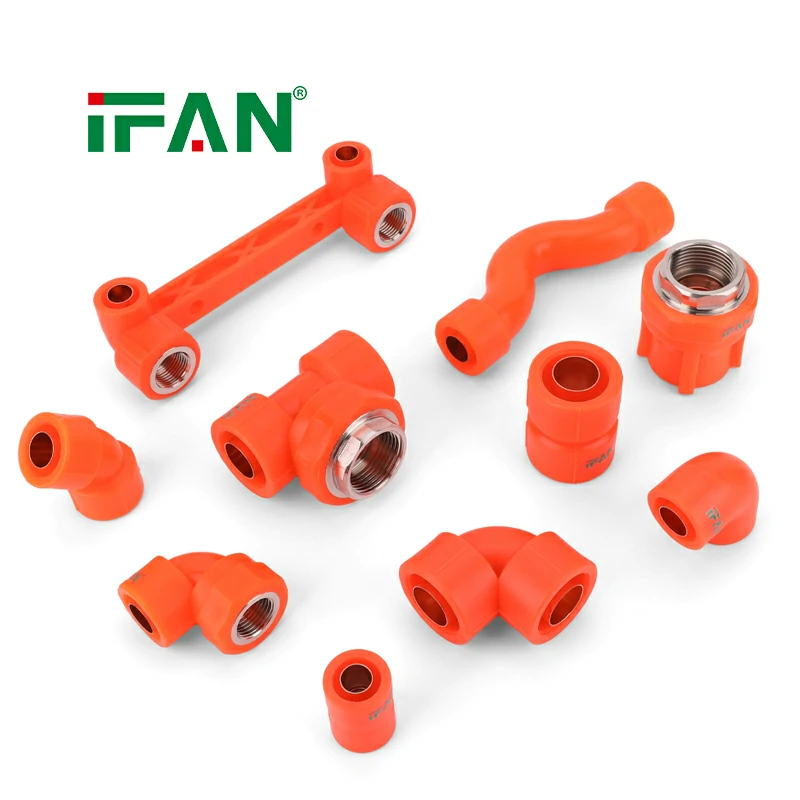

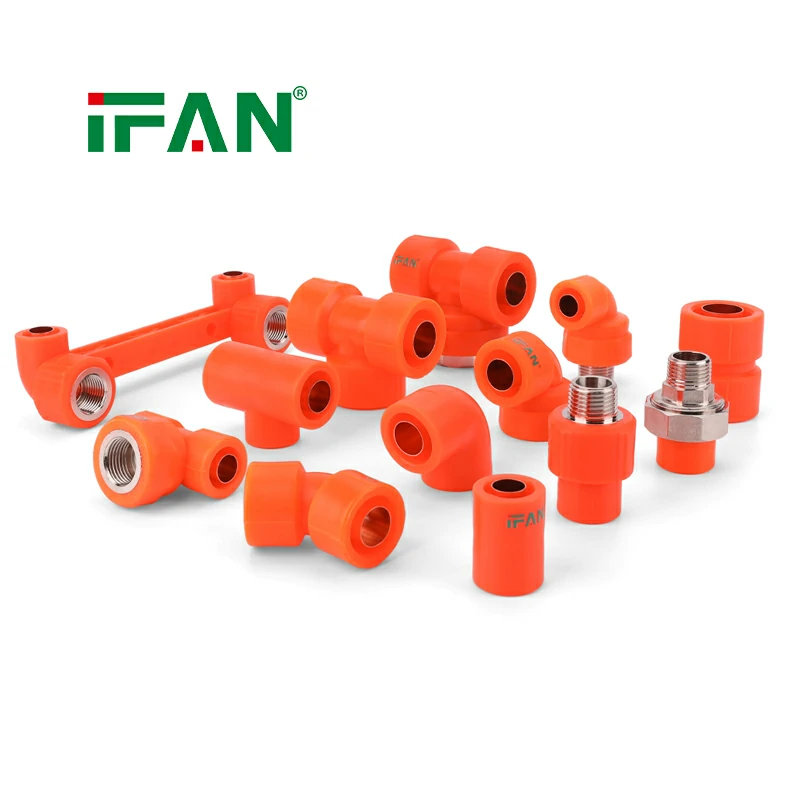
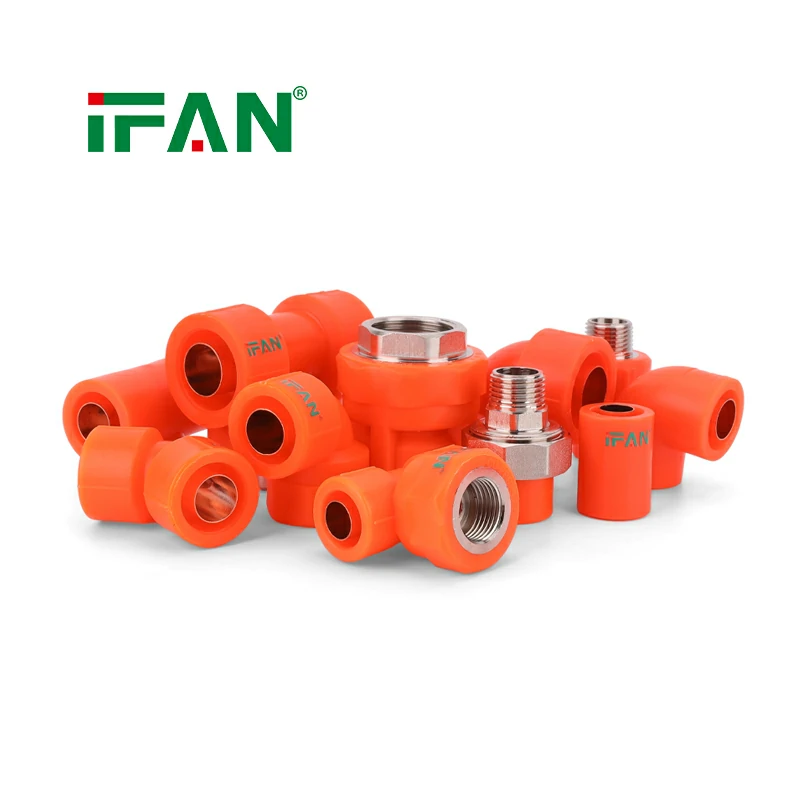
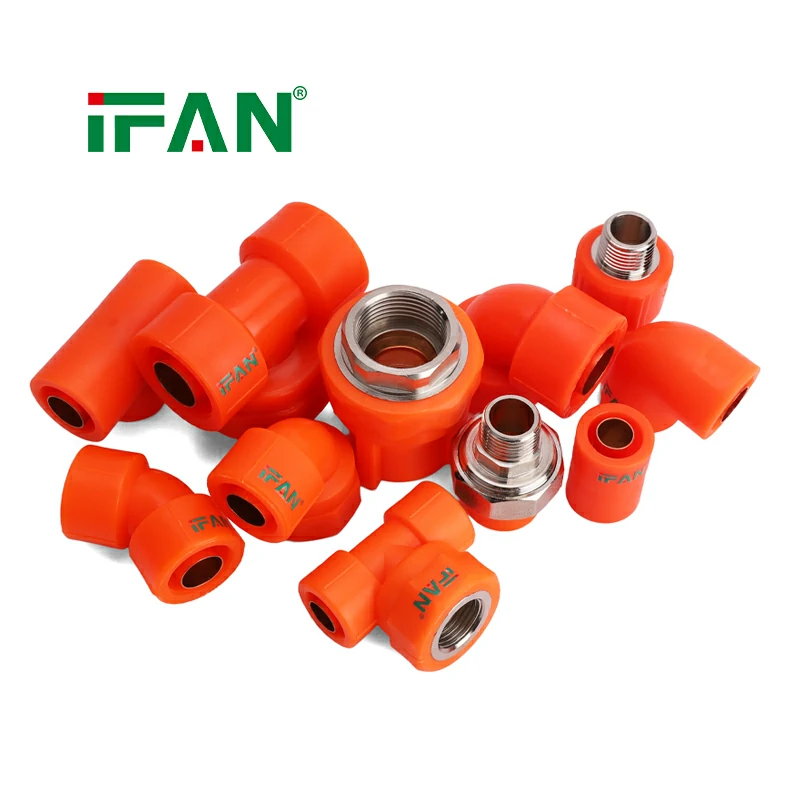
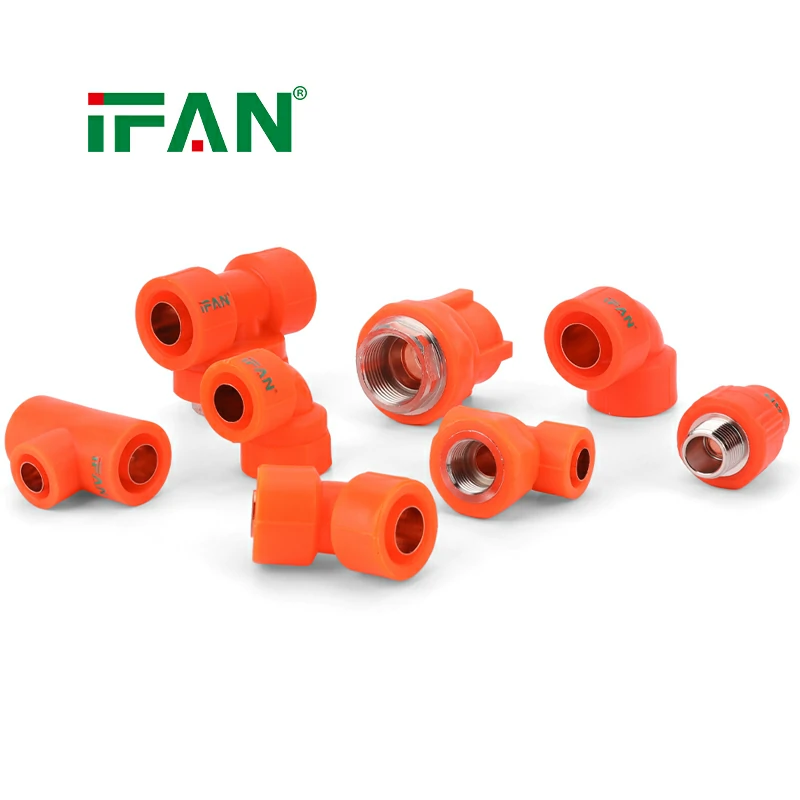
IFAN High Quality PPR Copper Fittings
Color: Orange
Pressure: PN25
Customized Service: OEM & ODM
Send Inquiry
Product Details ofIFAN High Quality PPR Copper Fittings
Definition and basic concept
PPR copper fittings are hybrid plumbing connectors. They combine polypropylene (PPR) and copper. One side joins PPR pipes. The other side joins copper pipes. Example: connecting old copper pipes to new PPR lines.
The two materials explained
PPR is a strong plastic for water pipes. Copper is a traditional metal for plumbing. PPR copper fittings merge both worlds. They offer flexibility and reliability. Example: a fitting with a PPR socket and a copper stub.
Why use a hybrid fitting
Direct joining of PPR and copper is hard. Different materials need special adapters. PPR copper fittings solve this problem perfectly. They eliminate extra transition pieces. Example: one fitting does the job of three separate adapters.
How the PPR side works
The PPR side is a smooth socket. You heat it with a welding tool. Then you insert the PPR pipe. The plastic melts and fuses. PPR copper fittings create a permanent weld on this side. Example: heating time is 7 seconds for 20mm pipe.
How the copper side works
The copper side is a plain tube. You clean it with sandpaper. Apply flux and heat with a torch. Then solder the copper pipe into place. PPR copper fittings form a strong metallic bond here. Example: solder flows into the gap by capillary action.
Example: renovating an old kitchen
Old house has copper pipes in the walls. New cabinets need PPR extensions. PPR copper fittings connect both systems. Cut the copper, clean it, and solder. Weld the PPR side to new plastic pipes. Example: a ½" copper to 20mm PPR fitting.

Example: fixing a leak in a mixed system
A joint between copper and PPR is leaking. The previous adapter failed. Replace it with a PPR copper fitting. Cut out the old section. Weld the PPR side first. Then solder the copper side. Example: repair completed in 30 minutes.
Available shapes and sizes
Straight couplers join pipes in a line. Elbows change direction by 90°. Tees split flow into two paths. PPR copper fittings come in many configurations. Example: reducing couplers for different diameters (25mm PPR to 15mm copper).
Pressure and temperature ratings
PPR handles up to 95°C and 10 bar. Copper handles much higher limits. PPR copper fittings inherit the lower rating of PPR. That is still fine for domestic systems. Example: hot water at 60°C and 4 bar is perfectly safe.
Installation tools required
For PPR: a welding machine (260°C) and pipe cutter. For copper: a gas torch, flux, and sandpaper. PPR copper fittings need both tool sets. Example: a plumber carries two kits for hybrid systems.
Common mistakes to avoid
Forgetting to insert PPR pipe fully. Not cleaning copper before soldering. Overheating the fitting near the PPR side. PPR copper fittings can be damaged by excessive heat. Example: hold torch away from the plastic end.
Advantages over mechanical adapters
No threaded connections to leak. No gaskets to replace over time. One-piece construction is more reliable. PPR copper fittings offer permanent joints. Example: a welded and soldered connection lasts 50+ years.
Final summary
PPR copper fittings are specialized transition pieces. They join PPR plastic pipes to copper pipes. Use them in renovations and repairs. They require both welding and soldering skills. Available in elbows, tees, and couplers. More reliable than threaded adapters. Follow proper heating and cleaning steps. Your hybrid system will last for decades. Example: a professional plumber keeps them in every service van.
IFAN factory 30+ years manufacture experience support color /size customization support free sample.Welcome to consult for catalog and free samples.This is our Facebook Website:www.facebook.com.
Hot Tags: ifan high quality ppr copper fittings, China, suppliers, manufacturers, factory, customized, bulk, pricelist, for sale, free sample, made in China, PPR Brass Female Tee, PPR Fitting, PPR Plastic Green White Tee, PPR Plastic Manifolds, PPR Radiator Valve Corner, PPR Radiator Valve Straight
Send Inquiry
