
Green and White PPR Fittings: Key Features and Applications
1. Material Properties and Environmental Benefits
Green and White PPR (Polypropylene Random Copolymer) fittings are engineered with sustainability in mind. Made from thermoplastic polypropylene, they are non-toxic, recyclable, and compliant with global green building standards (e.g.,IFAN). Advanced manufacturing techniques, such as PPR-aluminum-PPR composite layers (e.g., PPR AL PPR pipes), enhance strength and heat resistance while reducing resource consumption. This hybrid design outperforms traditional metal pipes (prone to corrosion) and PVC pipes (susceptible to aging).IFAN factory 30+ years manufacture experience support color /size customization support free sample.Welcome to consult for catalog and free samples.This is our Facebook Website:www.facebook.com.
2. Performance Advantages
High Temperature/Pressure Resistance: Operates in temperatures ranging from -20°C to 90°C (up to 100°C for specialized grades), suitable for hot/cold water systems, underfloor heating, and industrial fluid transport.
Chemical Resistance: Withstands acids, alkalis, and salts, ensuring longevity in harsh environments.
Leak-Proof Sealing: Heat fusion welding creates seamless joints, eliminating leakage risks and ensuring system reliability.
Easy Installation: Lightweight (e.g., 20–110mm diameters) and quick to install via hot-melt connections, reducing labor costs and project timelines.
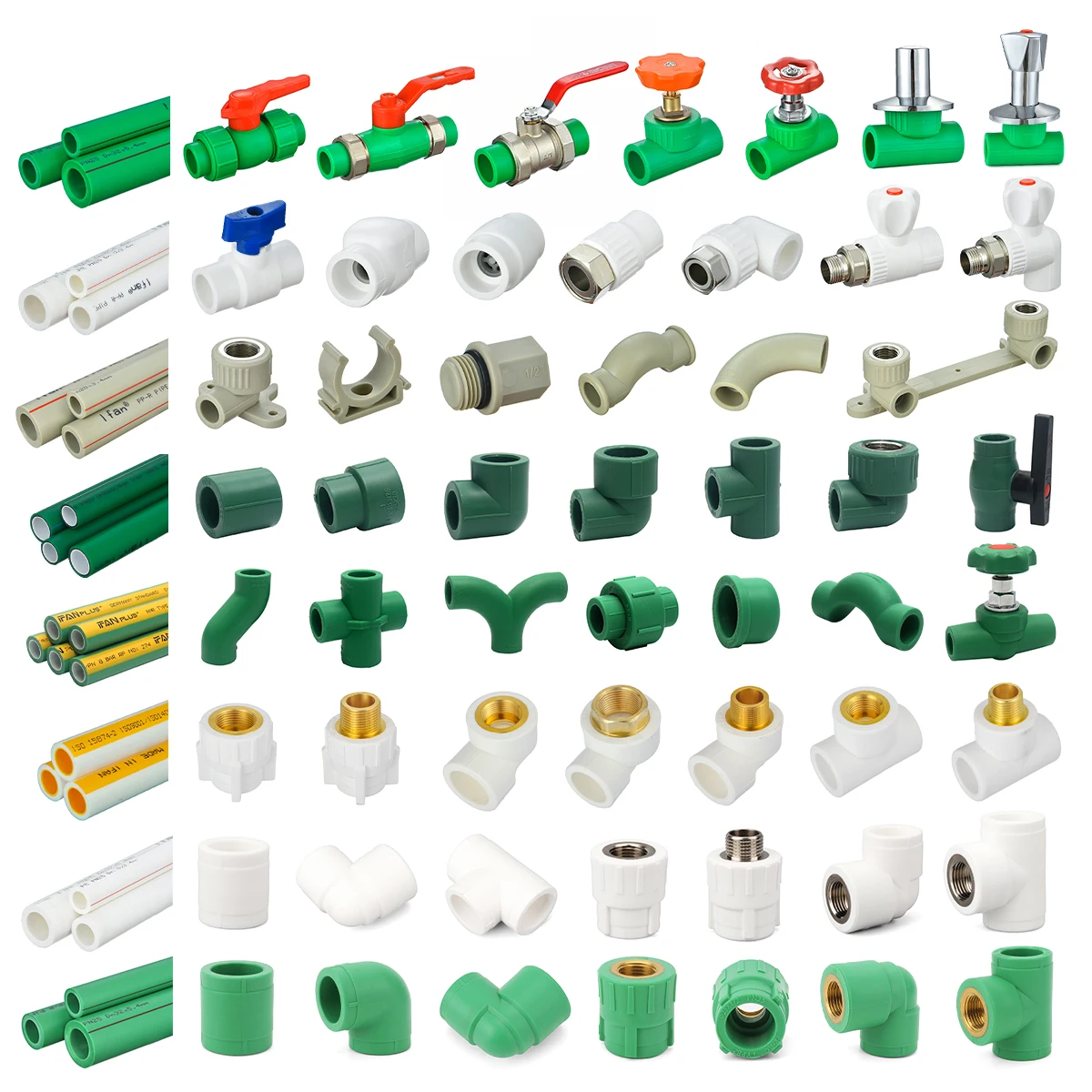
3. Color Differentiation and Functional Use
Green Fittings: Commonly used for cold water systems or functional identification (e.g., return lines). The color improves installation efficiency and maintenance clarity.
White Fittings: Preferred for potable water systems due to their opaque nature, which inhibits algae growth and preserves water quality. Their neutral color also blends seamlessly into interior designs.
Custom Options: Gray, blue, or other colors are available for specialized applications (e.g., industrial pipe labeling).
4. Specifications and Standards
Fittings range from 20mm to 160mm in diameter, adhering to international standards like ISO 15874 and DIN 8077/8078 for dimensional accuracy. For example:
A 40mm OD, 4.5mm wall-thickness green PPR pipe is ideal for cold water.
PN25-rated white fittings handle high-pressure hot water in high-rise buildings.
5. Typical Applications
Residential: Hot/cold water supply, radiant floor heating, rainwater harvesting.
Commercial: Hospitals, hotels, and schools (potable water and HVAC systems).
Industrial: Chemical fluid transport, compressed air lines (corrosion-resistant models).
Municipal: Urban water networks, fire protection (fire-rated certifications available).
6. Cost-Effectiveness
Initial Cost: Slightly higher than PVC but lower than copper/stainless steel.
Long-Term Savings: Reduced maintenance and replacement costs due to corrosion resistance. Heat fusion joints minimize leaks, lowering operational risks.
Environmental ROI: Recyclable material cuts waste, aligning with sustainability goals and potentially qualifying for tax incentives.
7. Buying Guide
Certifications: Prioritize ISO/DIN-compliant products with 50-year warranties.
Specification Matching: Select fittings based on pipe diameter and pressure rating (e.g., PN12.5 vs. PN25).
Color Functionality: Confirm application (cold/hot water, drinking systems) before choosing green/white.
Supplier Reputation: Partner with manufacturers offering OEM services, free samples, and technical support .
This version balances technical detail with readability, making it suitable for engineers, procurement teams, or marketing materials. Let me know if you'd like adjustments for specific audiences!