
PPR (Polypropylene Random Copolymer) pipe fittings are essential components in modern plumbing systems, widely used in residential, commercial, and industrial applications for hot/cold water supply, heating, and fluid transportation. Below is a detailed analysis covering material properties, key types, applications, and advantages:
1. Material Properties: Heat Resistance, Corrosion Resistance, and Safety
High-Temperature Tolerance:
PPR fittings withstand long-term exposure to 95°C and short-term temperatures up to 135°C, making them ideal for hot water systems (e.g., underfloor heating, solar water heaters), surpassing traditional PVC fittings.IFAN factory 30+ years manufacture experience support color /size customization support free sample.Welcome to consult for catalog and free samples.This is our Facebook Website:www.facebook.com.
Chemical Resistance:
Resistant to acids, alkalis, and salts, preventing corrosion-related leaks common in metal fittings and extending system lifespan.
Safety and Non-Toxicity:
Certified for potable water (e.g., ISO 15874, GB/T 18742) with no heavy metal leaching, ensuring water quality.
Lightweight and Flexible:
Weighs only 1/8 of metal fittings, reducing transportation and installation costs while offering ease of handling.
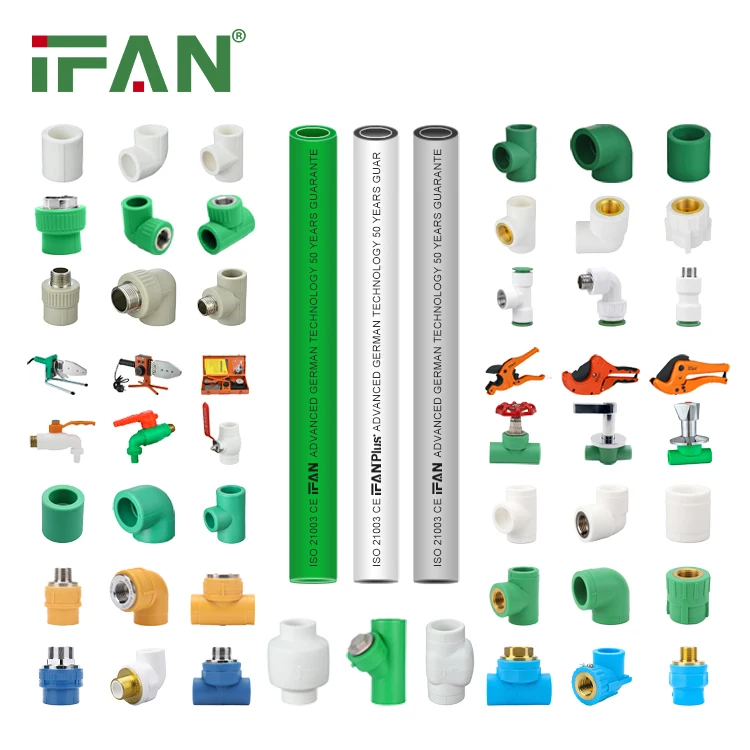
2. Key Types: Catering to Diverse Plumbing Layouts
Elbows (45°/90°)
Redirect pipe flow for complex layouts (e.g., corner turns).
Threaded elbows enable seamless connections with metal fixtures (e.g., faucets, valves).
Tees (Equal/Reducing)
Equal tees split flow into multiple branches (e.g., bathroom water outlets).
Reducing tees connect pipes of different diameters for optimized fluid distribution.
Couplers/Unions
Couplers join straight pipes with airtight seals.
Unions allow disassembly for easy maintenance or replacement.
End Caps/Plugs
Seal pipe ends to prevent debris ingress or fluid leakage.
Ball Valves/Stop Valves
Control flow with minimal resistance; ball valves are preferred for frequent on/off operations.
3. Applications: Covering All Fluid Transportation Needs
Residential Use
Hot/Cold Water Supply: Replace galvanized steel pipes for water heaters, taps, and showers.
Underfloor Heating: Connect manifolds to floor loops with high-temperature stability.
Commercial Buildings
Hotels/Offices: Used in HVAC condensate lines and fire sprinkler systems for low maintenance.
Hospitals/Labs: Meet sterile standards for purified water or chemical transport.
Industrial Sector
Food Processing: Transport potable water or food-grade liquids without metal contamination.
Chemical Plants: Resist corrosive solutions as a cost-effective alternative to stainless steel.
4. Core Advantages: Reliability, Cost-Efficiency, and Sustainability
Leak-Proof Heat Fusion:
Specialized tools melt-weld fittings to pipes, creating monolithic joints with zero leakage risks.
Longevity and Low Maintenance:
50+ year lifespan with excellent aging resistance, reducing replacement frequency.
Eco-Friendly Design
Recyclable Material: PPR is thermoplastic, enabling end-of-life recycling.
Energy Efficiency: Smooth inner walls minimize pump energy consumption, aligning with green building codes.
Cost-Effectiveness:
30–50% lower total cost (material + installation + maintenance) compared to metal systems, especially for large-scale projects.
5. Selection and Installation Guidelines
Certification Compliance:
Prioritize products meeting ISO 15874, GB/T 18742, or equivalent standards for quality assurance.
Size Matching:
Select fittings based on pipe outer diameter (e.g., DN20, DN25) to avoid flow restrictions from mismatched sizes.
Professional Installation:
Use heat fusion machines at 260°C ±10°C with precise timing to ensure joint strength.
Brand Reputation:
Choose trusted manufacturers (e.g., IFAN) whose products pass pressure tests (1.5× working pressure for 1 hour) and temperature cycling tests for reliability.
Conclusion
PPR pipe fittings are the cornerstone of reliable, efficient, and sustainable plumbing systems. Their heat resistance, corrosion immunity, and eco-friendly design make them indispensable across residential, commercial, and industrial sectors. By selecting certified products, adhering to installation best practices, and leveraging their cost benefits, users can build durable fluid transportation networks tailored to diverse needs.
Key Takeaway: For high-performance plumbing with minimal maintenance, PPR fittings offer an unbeatable combination of safety, durability, and environmental responsibility.