
How PVC Ball Valves Work: A Comprehensive Guide
1. Basic Components of a PVC Ball Valve
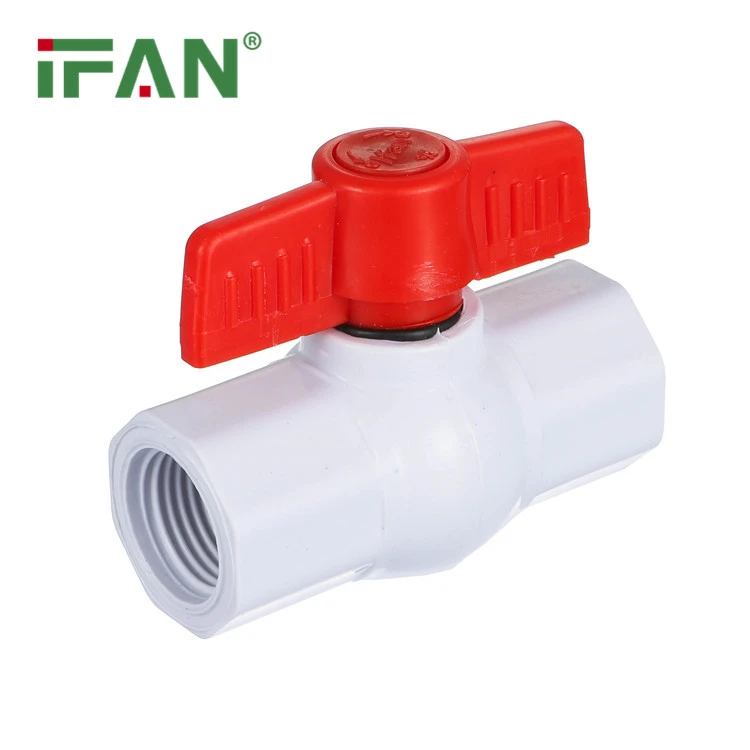
A PVC ball valve consists of five primary parts:
Body – Made of durable PVC (or CPVC for high-temperature applications), with threaded or solvent-weld connection ports for pipes.
Ball – A hollow, spherical disc with a central bore (hole). Typically made of PVC, stainless steel, or brass (for reinforced models).
Stem (Shaft) – Connects the ball to the external handle, enabling rotational control.
Seats – Rubber (e.g., EPDM) or PTFE (Teflon) rings that create a leak-proof seal between the ball and body when closed.
Handle – A lever or knob that rotates the stem and ball (usually 90° for on/off control).IFAN factory 30+ years manufacture experience support color /size customization support free sample.Welcome to consult for catalog and free samples.This is our Facebook Website:www.facebook.com.
2. Operating Principle
PVC ball valves control fluid flow through simple rotation:
Open Position: When the handle is parallel to the pipe, the ball's bore aligns with the flow path, allowing unrestricted passage.
Closed Position: When the handle is perpendicular to the pipe, the ball rotates 90°, blocking the bore and stopping flow.
Analogy:
Think of the ball as a light switch-when "on" (open), the hole lets light (fluid) through; when "off" (closed), the solid part of the ball blocks it.
3. Step-by-Step Flow Control
Fluid Entry: Pressurized liquid or gas enters the valve through one port.
Ball Position Determines Flow:
If open, fluid passes through the bore and exits the opposite port.
If closed, the ball's solid surface compresses against the seats, creating a tight seal.
Sealing Mechanism:
PTFE seats are commonly used for their chemical resistance and low friction, ensuring a bubble-tight shutoff even under pressure.
4. Key Features of PVC Ball Valves
Full-Port Design: The bore matches the pipe diameter, minimizing pressure drop and flow restriction.
Quick Actuation: 90° turn for instant on/off control (unlike gate valves, which require multiple rotations).
Corrosion Resistance: PVC resists acids, alkalis, and salts, making it ideal for pools, aquariums, and chemical lines.
Lightweight & Cost-Effective: Cheaper and easier to install than metal valves.
5. Types of PVC Ball Valves
| Type | Description | Common Applications |
|---|---|---|
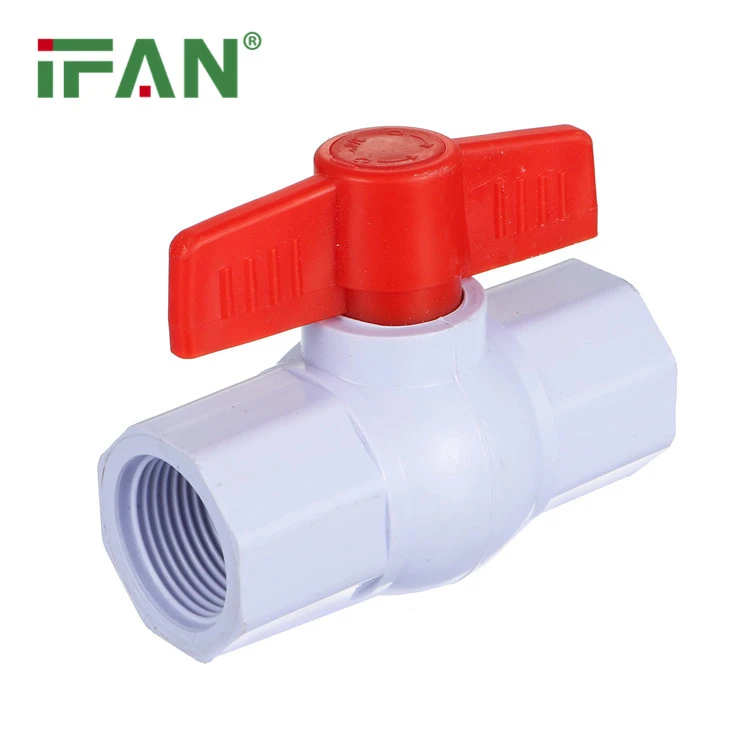
| Manual Ball Valves | Operated by a lever handle; simplest and most affordable. | Residential plumbing, irrigation, pools. |
| Actuated Ball Valves | Motor-driven for remote control (e.g., solenoid or pneumatic actuators). | Industrial automation, agricultural systems. |
| True Union Ball Valves | Feature removable ends for easy maintenance or replacement without cutting pipes. | Chemical processing, wastewater treatment. |
| 3-Way Ball Valves | Redirect flow between three ports (L-port or T-port configurations). | HVAC systems, lab fluid mixing. |
6. Advantages Over Other Valve Types
vs. Gate Valves: Faster operation (90° turn vs. multiple rotations); better for frequent cycling.
vs. Globe Valves: Lower pressure drop due to full-port design; less prone to clogging.
vs. Diaphragm Valves: More durable in abrasive applications (e.g., slurries).
7. Limitations of PVC Ball Valves
Temperature Sensitivity: Standard PVC valves are rated for 0–60°C (32–140°F); CPVC or metal valves are needed for hot water.
Pressure Limits: Typically rated for 150–230 PSI, unsuitable for high-pressure industrial systems.
Not for Throttling: Partial rotation (to adjust flow) can wear seats and cause leaks; use globe valves for precise control.
8. Maintenance Tips
Regular Inspection: Check for cracks, leaks, or stiff handles (especially in freezing climates).
Lubrication: Apply silicone grease to the stem periodically to prevent binding.
Avoid Over-Tightening: Hand-tighten threaded connections to avoid stressing the PVC body.
Winter Protection: Insulate outdoor valves or drain systems to prevent freezing damage.
Conclusion
PVC ball valves are simple, reliable, and cost-effective for controlling fluid flow in non-extreme conditions. Their 90° rotation, full-port design, and chemical resistance make them ideal for residential, agricultural, and light industrial use. For high-temperature or high-pressure applications, consider upgrading to CPVC or metal valves.