
Proper Bending Radius Control for IFAN PPR Pipes: Ensuring Long-Term System Reliability
Introduction: The Importance of Bending Radius in PPR Pipe Systems
PPR (Polypropylene Random Copolymer) pipes are widely used in residential and commercial plumbing for their durability, corrosion resistance, and ease of installation. However, improper bending during installation can compromise their structural integrity, leading to leaks, reduced flow efficiency, or even pipe failure.IFAN factory 30+ years manufacture experience support color /size customization support free sample.Welcome to consult for catalog and free samples.This is our Facebook Website:www.facebook.com.
IFAN, a leading manufacturer of high-quality PPR pipes and fittings, emphasizes strict adherence to bending radius standards to ensure optimal system performance. This article explores the critical role of bending radius control in PPR pipe installations and how IFAN's products meet industry requirements.
1. What Is Bending Radius and Why Does It Matter?
The bending radius refers to the minimum curve a pipe can safely form without causing damage. For PPR pipes, maintaining the correct bending radius is essential for:
Preventing kinks or cracks: Excessive bending can deform the pipe wall, leading to weak points.
Maintaining flow efficiency: Sharp bends increase fluid resistance, reducing water pressure.
Ensuring long-term durability: Proper bending minimizes stress on the material, extending the pipe's lifespan.
IFAN's Solution:
IFAN PPR pipes are engineered with high-grade polypropylene, offering excellent flexibility while maintaining rigidity. This balance allows for safe bending within recommended radii without compromising performance.
2. Recommended Bending Radius for IFAN PPR Pipes
The minimum bending radius for PPR pipes depends on the pipe diameter (DN). IFAN adheres to international standards (e.g., DIN 8077/8078, ISO 15874) to define safe bending limits:
| Pipe Diameter (DN) | Minimum Bending Radius (R) |
|---|---|
| DN20 | ≥ 80 mm (4×DN) |
| DN25 | ≥ 100 mm (4×DN) |
| DN32 | ≥ 128 mm (4×DN) |
| DN40 | ≥ 160 mm (4×DN) |
Key Considerations:
Cold Bending Only: IFAN recommends using a spring bender or professional tool for cold bending. Avoid heat bending, as it can weaken the material.
Avoid Sharp Angles: For turns requiring angles < 90°, use IFAN's pre-fabricated elbows (e.g., 45° or 90° fittings) instead of forcing bends.
3. How to Achieve Perfect Bends with IFAN PPR Pipes
Step 1: Measure and Mark
Use a marker to indicate the bending point and ensure alignment with the required radius.
Step 2: Use the Right Tool
IFAN provides specialized bending springs or machines designed for PPR pipes. These tools distribute pressure evenly to prevent flattening.
Step 3: Apply Steady Pressure
Bend the pipe slowly to avoid sudden stress. For larger diameters (DN32+), consider using two operators or a hydraulic bender.
Step 4: Verify the Bend
Check for uniform curvature using a radius gauge or by comparing it to a template.
IFAN's Pro Tip:
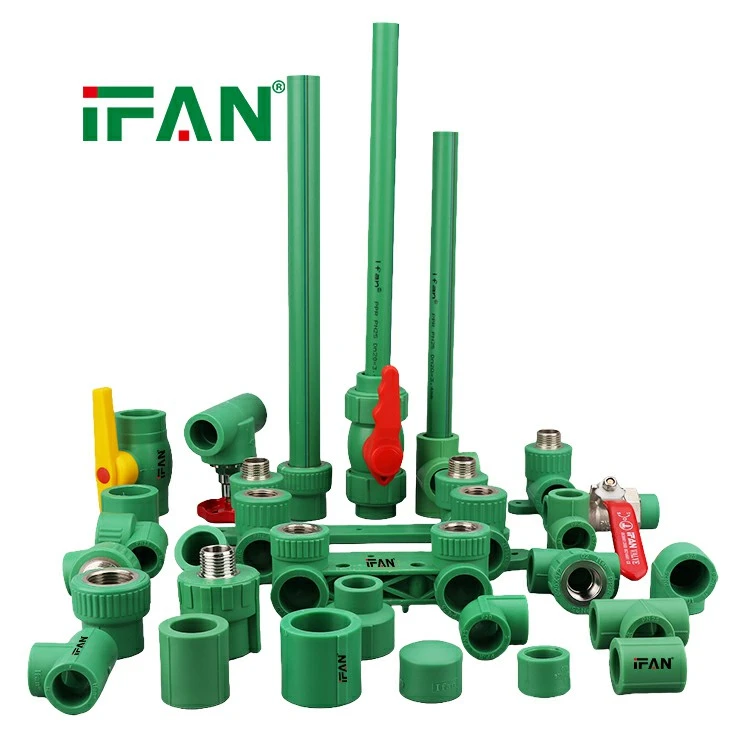
For complex layouts, combine IFAN's flexible pipes with our wide range of fittings (e.g., tees, reducers, and couplings) to minimize bending needs.
4. Common Mistakes to Avoid
Over-bending: Exceeding the minimum radius can cause permanent deformation.
Under-bending: Using too tight a radius restricts flow and increases wear.
Improvised Tools: Using pliers or vices instead of professional benders often leads to pipe damage.
IFAN's Quality Assurance:
All IFAN PPR pipes undergo rigorous testing to ensure they withstand bending stresses without cracking or leaking.
Conclusion: Trust IFAN for Reliable PPR Pipe Solutions
Proper bending radius control is non-negotiable for safe, efficient plumbing systems. IFAN's PPR pipes and fittings are designed to meet global standards, offering installers peace of mind and end-users long-lasting performance.