
Introduction
The advancement of piping systems over the past few decades has significantly influenced the efficiency, sustainability, and safety of modern infrastructure. Among the many innovations, Polypropylene Random Copolymer (PPR) fittings have emerged as a key development that redefined plumbing and fluid transport systems. Their superior durability, chemical resistance, and ease of installation have made them a reliable alternative to traditional materials such as steel, copper, and PVC. Understanding the evolution of PPR fittings reveals how this technology has transformed infrastructure development and set new standards for performance and sustainability.
Early Piping Materials and Their Limitations
Before the introduction of NBR 15884 PPR fittings, plumbing and water systems relied heavily on metal and early-generation plastics. Copper and galvanized steel pipes were widely used due to their strength and availability. However, they suffered from corrosion, scaling, and thermal inefficiency, leading to high maintenance costs and reduced lifespan. PVC and other plastic pipes provided an affordable option but lacked the ability to withstand high temperatures or pressures. These limitations highlighted the need for a more versatile and long-lasting material that could perform under various environmental and operational conditions.
The Emergence of Polypropylene in the Piping Industry
The use of polypropylene (PP) in the mid-20th century marked a major shift in plastic piping materials. Initially, homopolymer polypropylene offered good chemical resistance but was too brittle for many applications. As material science progressed, the development of polypropylene random copolymer (PPR) provided a breakthrough. By incorporating ethylene into the polymer chain, PPR achieved improved flexibility, toughness, and heat resistance. This innovation made it suitable for both hot and cold water systems, setting the foundation for modern PPR pipe and fitting technology.
Development of Fusion Welding Technology
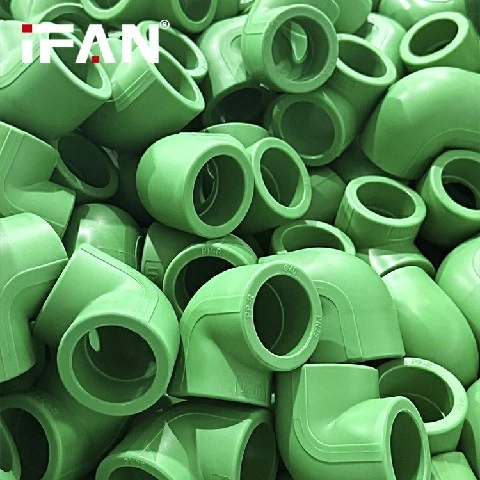
One of the most significant milestones in the evolution of PPR fittings was the adoption of fusion welding technology. Traditional mechanical joints often suffered from leaks and required frequent maintenance. With fusion welding, PPR pipes and fittings are joined using heat to form a single, homogeneous structure. This method ensures a leak-free, durable connection that can handle high pressure and temperature fluctuations. The simplicity and reliability of this process have contributed greatly to the widespread use of PPR systems in residential, commercial, and industrial installations.
Standardization and Global Adoption
As PPR technology matured, international standards such as ISO 15874 and DIN 8077/8078 were established to regulate material properties, dimensions, and performance criteria. These standards ensured consistent quality and compatibility across manufacturers, accelerating global adoption. PPR fittings gained recognition for their reliability in potable water systems, heating networks, and industrial pipelines. In Europe and Asia, the technology quickly replaced outdated metal systems, while in developing regions, it became a cost-effective solution for infrastructure expansion.
Improved Material Formulations and Additives
Over time, the composition of PPR materials has been refined to enhance performance and longevity. Additives such as antioxidants, UV stabilizers, and colorants have been incorporated to resist degradation from heat and sunlight. These advancements allow PPR fittings to function effectively in both indoor and outdoor environments. The improved formulations also enhance resistance to oxidation and hydrolysis, ensuring that fittings remain stable even after decades of service. As a result, modern PPR fittings can withstand temperatures up to 95°C and pressures exceeding 20 bar, meeting the demands of diverse applications.
Integration in Modern Plumbing Systems
With ongoing urbanization, the need for efficient, sustainable, and easy-to-install piping systems has never been greater. PPR fittings have become a core component of modern plumbing design due to their ability to support quick assembly, minimize maintenance, and ensure consistent water quality. Their smooth inner surfaces reduce friction losses and prevent scale buildup, maintaining optimal flow rates over time. In multi-story buildings, hospitals, and industrial complexes, PPR systems are favored for their safety, durability, and performance under continuous load.
Sustainability and Environmental Impact
Environmental awareness has driven the demand for eco-friendly construction materials, and PPR fittings align perfectly with this vision. Made from recyclable materials, they produce minimal environmental impact during manufacturing and disposal. Their long lifespan-often exceeding long-term durability according to standards-reduces the frequency of replacements, lowering both material waste and carbon emissions. Moreover, the low thermal conductivity of PPR reduces energy loss in hot water distribution, enhancing the overall energy efficiency of buildings. These sustainability benefits have positioned PPR systems as a cornerstone of green building certifications worldwide.
Technological Advancements and Smart Piping Systems
In recent years, PPR fittings have evolved alongside advancements in digital and automated infrastructure. Smart water systems now integrate sensors and monitoring technologies that detect pressure changes or leaks in real time. PPR fittings are being adapted to work seamlessly with these systems, ensuring reliability and precise flow control. Additionally, new manufacturing methods such as precision molding and automated quality inspection guarantee higher consistency and tighter dimensional tolerances. The integration of smart technologies is expanding the role of PPR fittings in next-generation infrastructure.
Comparative Advantages over Competing Materials
When compared to other piping materials like copper, CPVC, or HDPE, PPR fittings offer an ideal balance of strength, cost-efficiency, and environmental compatibility. Unlike copper, PPR does not corrode or leach metals into the water. Compared to CPVC, it provides better temperature tolerance and flexibility. While HDPE is excellent for large-scale applications, PPR fittings are easier to install in confined or residential settings. Their balance of properties makes them a universal solution for water supply, heating, and chemical transport networks.

Challenges and Areas for Future Development
Despite their many advantages, PPR fittings continue to face challenges related to installation practices, counterfeit products, and compatibility with older piping systems. Poor fusion welding techniques can lead to weak joints, emphasizing the need for proper training and standardized equipment. Research is also ongoing to improve the material's resistance to extreme weather and chemical conditions. Innovations such as reinforced composite PPR or multi-layered structures are being explored to further enhance strength and expand the scope of application in infrastructure projects.
Future Outlook for PPR Fittings
The future of PPR fittings is closely tied to the global push for sustainable and intelligent infrastructure. As urban environments grow more complex, the need for dependable and long-lasting piping systems will continue to rise. Manufacturers are focusing on developing high-performance PPR materials that can integrate with renewable energy systems and advanced water management solutions. With continued innovation, PPR fittings will remain essential to the evolution of smart cities, energy-efficient buildings, and sustainable water infrastructure across the world.
Conclusion
The evolution of PPR fittings represents one of the most impactful advancements in piping technology. From their origins as a modification of polypropylene to their current role in sophisticated infrastructure systems, PPR fittings have continuously adapted to meet modern demands. Their durability, safety, and sustainability have made them indispensable in both developed and developing regions. As technology continues to advance, PPR fittings are poised to play an even greater role in shaping the future of plumbing, water management, and sustainable construction.