
Understanding PEX Compression Fittings: A Complete Guide
1. What Are PEX Compression Fittings?
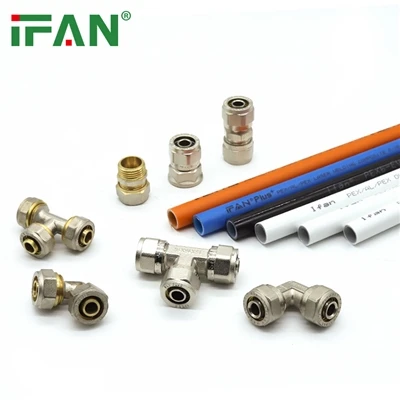
PEX compression fittings are mechanical connectors designed to join PEX (cross-linked polyethylene) pipes without heat, glue, or soldering. They rely on a compression mechanism to create a watertight seal, making them popular for DIYers and professionals alike due to their ease of use and versatility.IFAN factory 30+ years manufacture experience support color /size customization support free sample.Welcome to consult for catalog and free samples.This is our Instagram Website: www.instagram.com.
2. Key Components
A typical compression fitting includes:
Compression Nut: Threaded ring that tightens around the pipe.
Compression Ring/Ferrule: A conical sleeve that compresses onto the PEX pipe as the nut is tightened.
Insertion Depth Mark: Indicates proper pipe insertion to ensure a secure connection.
3. How They Work
The PEX pipe is inserted into the fitting body until it reaches the depth mark.
The compression ring is slid over the pipe and against the fitting shoulder.
The compression nut is hand-tightened, then tightened with a wrench, compressing the ring onto the pipe. This creates a wedge-like seal that grips the pipe both radially and axially.
4. Advantages of PEX Compression Fittings
Tool-Free Installation: No heat guns, crimp tools, or soldering required.
Reusability: Fittings can be disassembled and reused (rare for other PEX connection methods).
Visual Leak Verification: Easy to inspect for proper engagement.
Versatility: Work with copper, CPVC, and other pipe types using adapters.
5. Limitations
Sensitivity to Pipe OD: Requires precise pipe outer diameter (OD) measurements; oversized pipes may leak.
Pressure Ratings: Generally lower than crimp or clamp fittings (check manufacturer specs).
Installation Skill: Over-tightening can deform PEX; under-tightening may cause leaks.
6. Applications
Temporary Installations: Ideal for testing or seasonal setups.
Repair Work: Quick fixes in hard-to-reach areas.
DIY Projects: Suitable for homeowners without specialized tools.

7. vs. Other PEX Connection Methods
| Method | Tool Required | Speed | Permanence |
|---|---|---|---|
| Compression | Wrench | Fast | Semi-permanent |
| Crimp | Crimp Tool | Moderate | Permanent |
| Clamp (Cinch) | Cinch Tool | Fast | Permanent |
| Expansion | Expansion Tool | Slow | Permanent |
8. Best Practices
Measure Twice: Always verify pipe OD before installation.
Tighten Properly: Use two wrenches (one to hold the fitting, one to turn the nut).
Test After Installation: Pressurize the system to check for leaks.
Conclusion
PEX compression fittings offer a flexible, tool-free solution for connecting PEX pipes in various applications. While they excel in simplicity and reusability, proper installation and attention to pipe dimensions are critical to ensuring leak-free performance. For permanent installations in high-pressure systems, consider crimp or expansion methods.